- Cart
- |
- Personal Center
- |
info@idealphotonics.com


















New Products
New Products

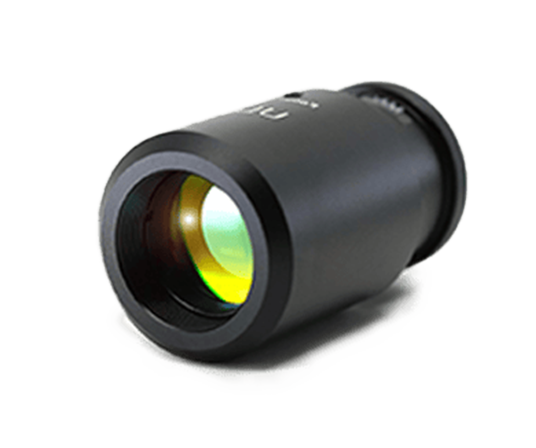
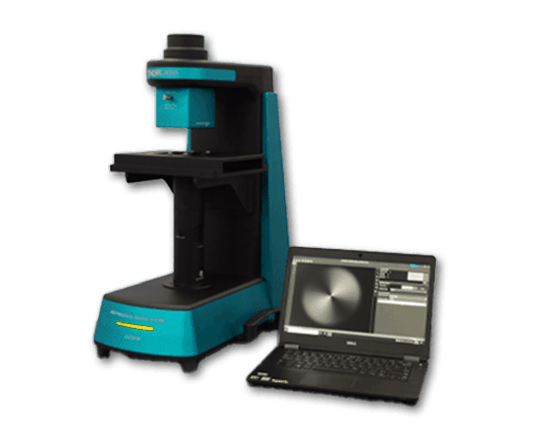
The Micro Beam Analyzer is a high-precision laser beam diagnostic device designed for real-time measurement, analysis, and visualization of micrometer- and submicrometer-scale laser beams. It is suitable for continuous-wave and pulsed lasers and can perform precise beam profile analysis of fiber-output beams, laser diodes, and focused infrared laser beams. The system is equipped with a 100× near-infrared objective and a high-resolution infrared camera, supports the 480–1550 nm wavelength range, can measure beam sizes smaller than 0.5 μm, and provides 2D and 3D beam distribution displays and data analysis functions. It is suitable for precision optical measurement, laser R&D, beam quality evaluation, and other fields.

Large-Mode-Area Polarization-Maintaining Ytterbium-Doped Photonic Crystal Fiber
Large-mode-area polarization-maintaining ytterbium-doped photonic crystal fiber features a large mode field area, overcomes nonlinear effects, and enables laser transmission with high peak power and large pulse capability. By adjusting fiber parameters, Changyingtong can provide customized large-mode-area polarization-maintaining ytterbium-doped photonic crystal fibers in different sizes and shapes to meet various application requirements.

Polarization-Maintaining Photonic Crystal Fiber
Polarization-maintaining photonic crystal fiber can be used in fiber optic gyroscopes and polarization-related devices. It features radiation resistance, high birefringence, and excellent temperature stability. This fiber has a large refractive index step between air and glass, which produces strong birefringence and results in a short beat length. Compared with conventional polarization-maintaining fibers, polarization-maintaining photonic crystal fiber can reduce coupling between different polarization states caused by bending and maintain a high extinction ratio.

Fiber Bragg Grating Strain Cable
The Fiber Bragg Grating Strain Cable is a distributed multi-point strain monitoring product based on Fiber Bragg Grating (FBG) sensing technology. Multiple FBG sensing units are embedded at specified intervals into a fiberglass-reinforced optical cable with a diameter of approximately 1 mm, enabling continuous multi-point measurement of structural strain. The product features high measurement accuracy, a compact structure, flexible measuring-point spacing, and no need for intermediate splicing. Up to 18 strain measuring points can be arranged per string. It is suitable for strain monitoring and safety assessment in bridges, tunnels, pile foundations, dams, building structures, and other engineering projects.

Fiber Bragg Grating Hydrostatic Level
The Fiber Bragg Grating Hydrostatic Level is a high-precision settlement and vertical displacement monitoring device based on fiber Bragg grating sensing technology. It is mainly used to measure the relative elevation changes between monitoring points. The product forms a monitoring system by interconnecting multiple hydrostatic levels. Using a relatively stable monitoring point as the reference point, the structural settlement is calculated by measuring the liquid level changes between the reference point and the observation points. The product features high measurement accuracy, high resolution, automatic temperature compensation, and multi-point collaborative monitoring. It is suitable for long-term settlement and vertical displacement monitoring of bridges, tunnels, subways, dams, foundation pits, large storage tanks, and other engineering projects, providing reliable data support for engineering structure safety assessment and operation and maintenance.

Fiber Bragg Grating Piezometer
The Fiber Bragg Grating Piezometer is a high-precision water pressure monitoring device based on fiber Bragg grating sensing technology. The product uses a high-elastic metal diaphragm as the core pressure-sensing element. The small deformation of the diaphragm caused by water pressure changes the reflected wavelength of the fiber Bragg grating, thereby enabling accurate measurement of water pressure. The product features high measurement accuracy, high sensitivity, and good stability. It is suitable for seepage pressure monitoring inside rock masses, soil, concrete, and various hydraulic structures, and can also be used to monitor water level changes at monitoring points, providing reliable data support for engineering safety monitoring and long-term operation management.

Three-Dimensional Photonic Interconnect Chip
The three-dimensional photonic interconnect chip is a high-precision optical interconnect device manufactured based on femtosecond laser direct writing technology. By constructing a three-dimensional optical waveguide network inside a glass substrate, it enables efficient transmission and spatial interconnection of multi-channel optical signals. The product supports conversion between different waveguide pitches and spatial arrangements, and offers advantages such as low transmission loss, high integration, compact structure, and flexible optical path design. It also supports 1310 nm and 1550 nm operating wavelengths and can be widely used in fields such as data center optical communication, optical modules, CPO co-packaged optics, and photonic integrated chip packaging, providing reliable optical path connection solutions for high-density, miniaturized optical interconnect systems.

HHL-Packaged Terahertz Quantum Cascade Laser
The HHL-packaged terahertz quantum cascade laser is a high-performance terahertz laser source using compact high heat-load packaging technology.The product employs four-stage thermoelectric cooling and water-cooling technology. It can achieve terahertz laser output without the need for a traditional cryostat or deep-cooling media such as liquid nitrogen and liquid nitrogen [sic]. By integrating a patch-array antenna, it achieves low-divergence, single-lobe surface emission and offers advantages such as a compact structure, good beam directivity, and convenient system integration. The product uses an industrial-standard HHL hermetic package and is suitable for fields including terahertz spectral analysis, scientific research, imaging inspection, and precision optoelectronic system development.

Weak-Reflection Fiber Bragg Grating Temperature-Sensing Cable
The weak-reflection fiber Bragg grating (FBG) temperature-sensing cable uses a single-mode sensing fiber. By continuously inscribing ultra-low-reflectivity FBGs at equal intervals along the fiber axis and combining this with a dedicated stress-free isolation packaging process, it achieves long-distance, high-precision, continuous distributed temperature monitoring. The product measures temperature based on the characteristic that the FBG center wavelength changes with temperature. It offers advantages such as no power supply requirement, immunity to electromagnetic interference, stable structure, and high measurement accuracy. It can meet the needs of large-scale temperature monitoring at kilometer scale and even up to 10,000-meter scale, and is suitable for temperature monitoring and safety early warning in fields such as electric power, energy, industry, and infrastructure.

Temperature and Humidity Type Weak-Reflection Fiber Bragg Grating Sensing Cable
The temperature and humidity type weak-reflection fiber Bragg grating (FBG) sensing cable is a special fiber-optic sensing product integrating simultaneous temperature and humidity monitoring. The product adopts weak-reflection FBG array technology, combined with humidity-sensitive coating and sensitization packaging processes, to achieve quasi-distributed, passive, long-distance temperature and humidity monitoring. The cable uses a stainless steel armored tube, aramid, and stainless steel wire reinforcement structure, providing good tensile and compressive performance and environmental adaptability. It can be widely used for long-term temperature and humidity monitoring in infrastructure, underground engineering, and industrial environments.

Weak-Reflection Fiber Bragg Grating Micro-Strain Sensing Cable
The weak-reflection fiber Bragg grating (FBG) micro-strain sensing cable is a high-sensitivity fiber-optic sensing product designed specifically for micro-strain monitoring of structures. It is suitable for embedded and surface-bonded installation. The product adopts a tight-buffered weak-reflection FBG structure combined with a fiber-reinforced layer design, providing good lateral compression resistance, mechanical strength, and strain transfer performance. With a compact structure and small outer diameter, the cable can sensitively detect tiny strain changes in structures and is suitable for long-term strain monitoring of civil engineering, infrastructure, and industrial structures.

Weak-Reflection Fiber Bragg Grating Interrogator
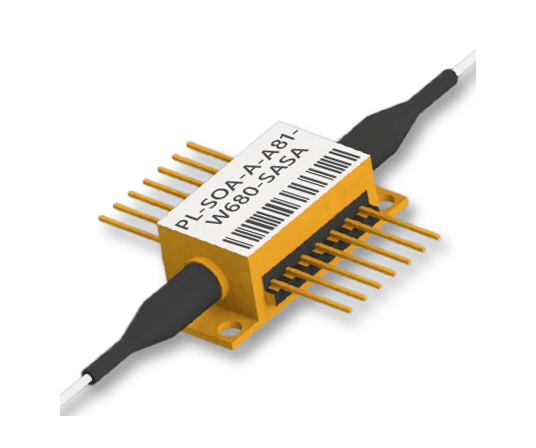
The weak-reflection fiber Bragg grating (FBG) interrogator is a high-performance interrogation device designed for high-density, long-distance weak-reflection FBG arrays. The product integrates a tunable laser, an SOA pulse modulation module, an EDFA optical amplifier, a high-speed photodetector, and a ZYNQ/MPSoC embedded processing platform. It adopts time-division multiplexing (TDM) and wavelength scanning technology to achieve high-precision wavelength interrogation and real-time monitoring of large-scale FBG arrays. The device supports a maximum measurement distance of 10 km, 25,000 spatial sampling points, and a minimum spatial sampling resolution of 0.2 m, and it offers multi-channel expansion capability. The system can independently perform spectral analysis, wavelength interrogation, and data processing, and directly output measurement data such as wavelength, strain, temperature, and humidity. It is widely used in structural health monitoring, industrial equipment monitoring, distributed optical fiber sensing, and other fields.
 10+
10 Years of Experience
 50
50 + Countries Bussiness
 10000
10k + Diodes sold worldwide
 30
30+ Invention patent
 10
10+ Advanced Optical Solutions
⇪