- Cart
- |
- Personal Center
- |
info@idealphotonics.com

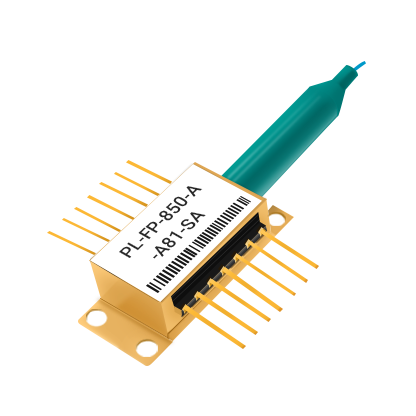

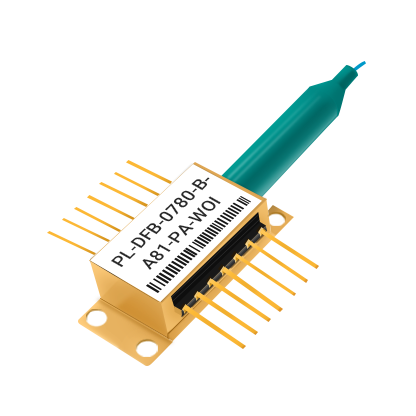
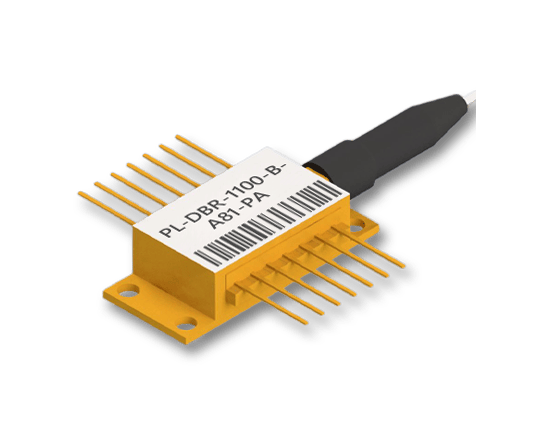
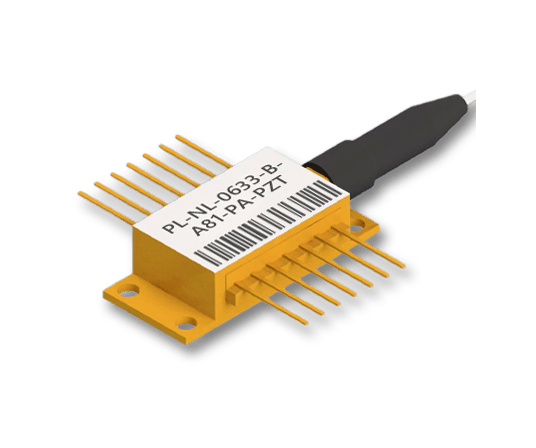
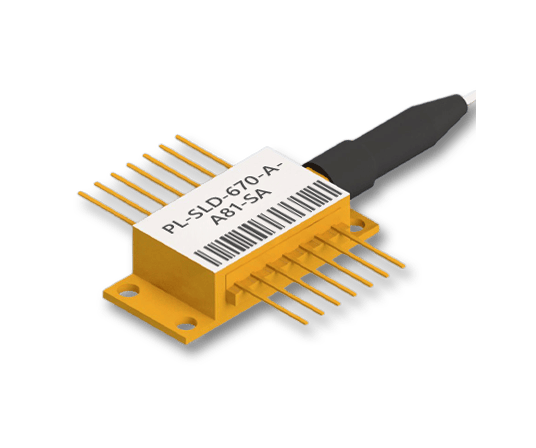
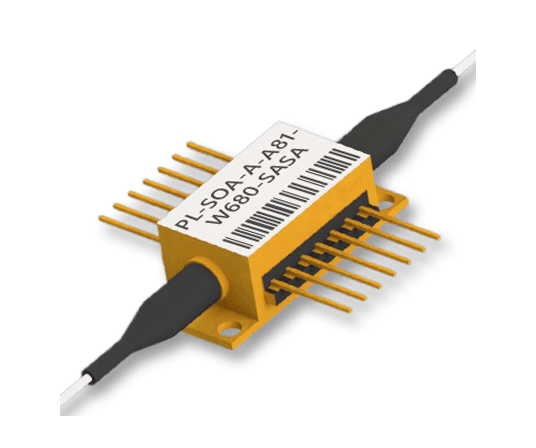
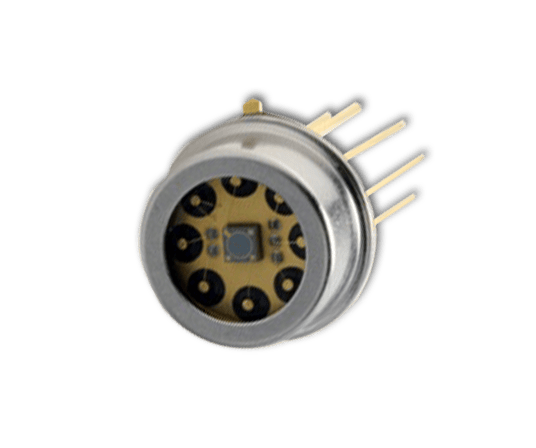


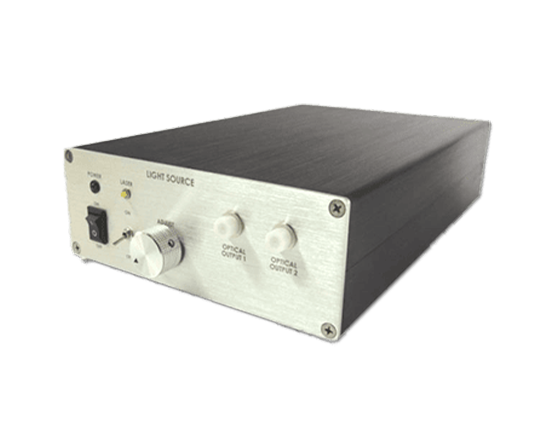
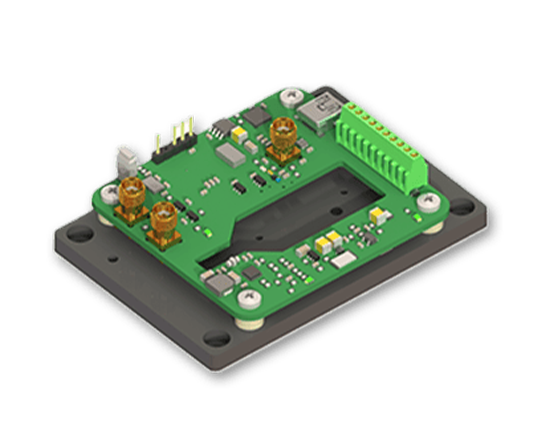


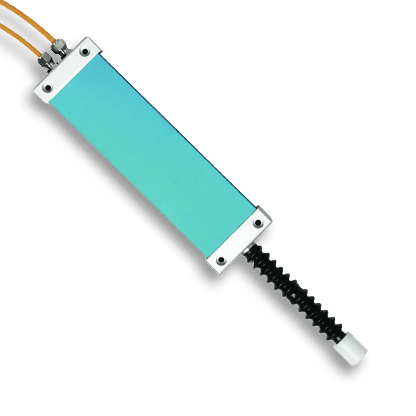
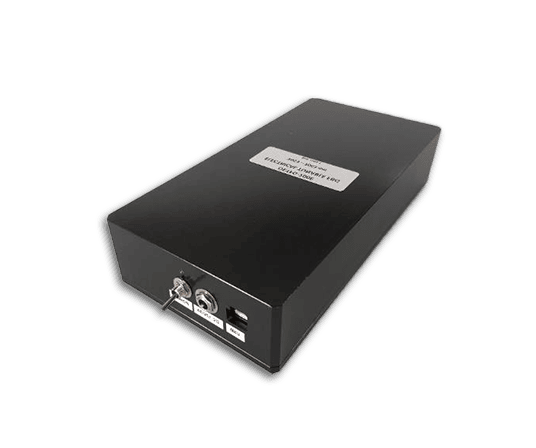


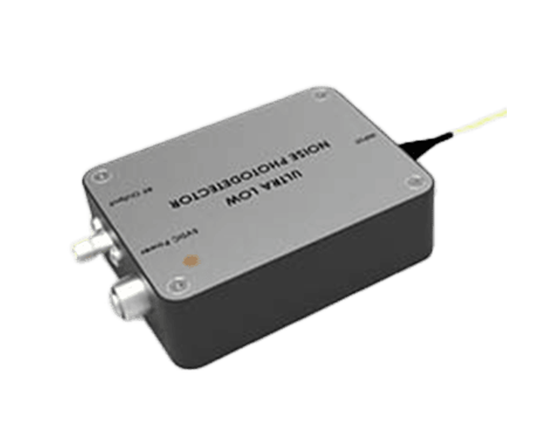
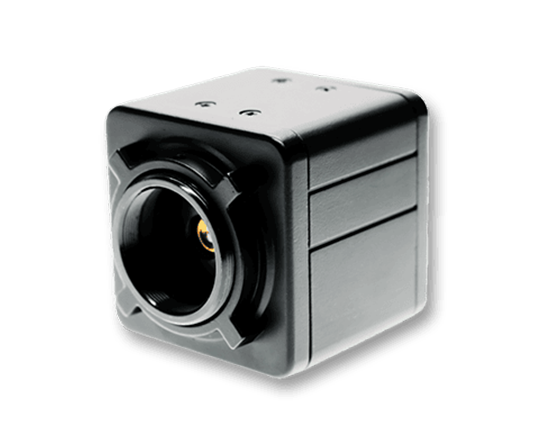








DFB Laser Diode
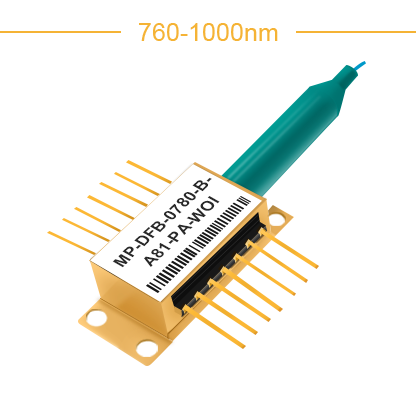
IdealPhotonics' 760-1000nm DFB diode is a single-longitudinal-mode semiconductor light source based on the Bragg grating wavelength selection mechanism. Employing an AlGaAs/InGaAsP multi-quantum-well structure, it achieves sub-nanometer-level wavelength stability (±0.01nm/℃) and ultra-high side-mode suppression ratio (>50dB). It is irreplaceable in fields requiring precise wavelength control, such as atomic spectroscopy (Rb 780nm), biomedicine (808nm), and industrial processing (976nm). Its narrow linewidth (1MHz) is two orders of magnitude better than ordinary lasers.Based on sub-nanometer precision Bragg gratings (period error ±0.5nm) and strain-compensated quantum well structures, ultra-high single-mode purity (side-mode suppression ratio >55dB) and ultra-narrow linewidth (up to 100kHz) are achieved. This results in absolute technological dominance in fields requiring extreme spectral characteristics, such as atomic spectral precision locking (e.g., Rb 780.24nm±1MHz), biomedicine (808nm tissue optimization), and industrial sensing. Its wavelength stability (±0.005nm/℃) is two orders of magnitude higher than that of ordinary lasers, representing the highest level of spectral precision in semiconductor lasers.
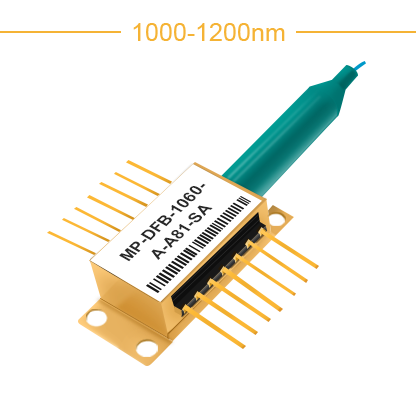
IdealPhotonics' 1000-1200nm DFB diode, based on a distributed feedback laser using InGaAs/AlGaAs or InGaAsP/InP material systems, employs a high-precision Bragg grating (period control accuracy ±0.2nm) to achieve single-mode output. It features ultra-narrow linewidth (typically <1MHz) and excellent wavelength stability (±0.01nm/℃), demonstrating irreplaceable technological advantages in near-infrared precision spectroscopy applications such as fiber optic sensing (1064nm), gas detection (1130nm water vapor absorption line), and medical diagnostics (1150nm tissue imaging).Single-mode output is achieved using strain-optimized InGaAs(P)/InP quantum wells and a high-precision Bragg grating (±0.1nm period control), while also possessing ultra-narrow linewidth.
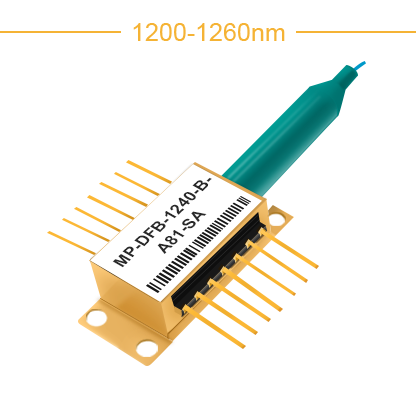
IdealPhotonics' 1200-1260nm DFB diodes, based on InGaAs/AlGaAs or InGaAsP/InP material systems, are distributed feedback lasers. Employing a high-precision Bragg grating (period control accuracy ±0.2nm) to achieve single-mode output, they feature ultra-narrow linewidth (typically<1MHz) and excellent wavelength stability (±0.01nm/℃). These diodes demonstrate irreplaceable technological advantages in near-infrared precision spectroscopy applications such as fiber optic sensing (1064nm), gas detection (1130nm water vapor absorption line), and medical diagnostics (1150nm tissue imaging).A strain-optimized InGaAs(P)/InP quantum well and a high-precision Bragg grating (±0.1nm periodic control) are used to achieve single-mode output, combining ultra-narrow linewidth (
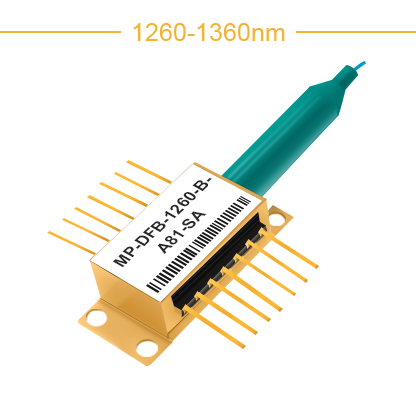
IdealPhotonics' 1260-1360nm DFB diode, based on an InGaAsP/InP strain-compensated quantum well and a high-precision Bragg grating (±0.03nm control accuracy), is a single-longitudinal-mode laser achieving a side-mode suppression ratio of >65dB and wavelength stability of ±0.003nm/℃. It demonstrates 0.001nm-level spectral resolution in key O-band applications such as 1310nm fiber optic communication, 1330nm methane detection, and 1350nm tissue spectroscopy. Its modulation linearity is 8 times higher than conventional devices, making it a benchmark light source for high-speed optical communication and precision molecular detection.Employing an InGaAsP/InP strained superlattice and atomic layer-deposited Bragg gratings (period control accuracy ±0.02nm), this device achieves a record-breaking side-mode suppression ratio of >65dB and wavelength stability of ±0.002nm/℃. It simultaneously meets the high-speed and high-precision requirements in applications such as 1310nm fiber optic communication (25Gbps direct modulation) and 1335nm greenhouse gas detection (0.1ppb sensitivity). Its -158dB/Hz relative intensity noise and 0.8MHz ultra-narrow linewidth make this device the only dual-standard light source capable of handling both optical communication and spectral detection.
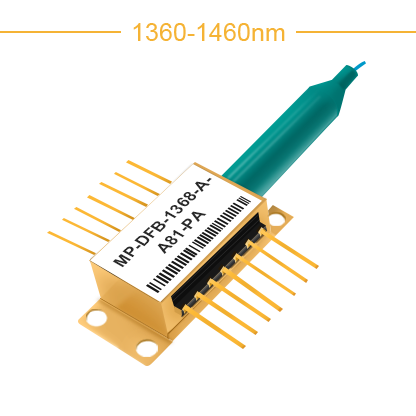
IdealPhotonics' 1360-1460nm DFB diode, based on an InGaAsP/InP strained superlattice and an electron beam lithography Bragg grating (±0.01nm precision), is a single-longitudinal-mode laser achieving a breakthrough wavelength stability of >70dB side-mode suppression ratio and ±0.001nm/℃. In specialized E+S band applications such as 1380nm water molecule detection, 1410nm methane remote sensing, and 1450nm biological tissue imaging, it combines 0.005cm⁻¹ spectral resolution with 10Gbps high-speed modulation capability. Its quantum efficiency is 50% higher than conventional devices, making it a next-generation cross-disciplinary solution for ultra-fine spectroscopy and high-speed optoelectronic integration.Employing InGaAsP/InP quantum wells and sub-angstrom precision Bragg gratings (±0.01nm), this chip achieves a side-mode suppression ratio of >70dB and a limiting wavelength stability of ±0.001nm/℃. In specialized wavelength applications such as 1380nm atmospheric water vapor detection (0.01ppb sensitivity), 1410nm greenhouse gas monitoring, and 1450nm biomedical imaging, it simultaneously possesses an ultra-high spectral resolution of 0.005cm⁻¹ and a high-speed modulation capability of 12Gbps. Its quantum efficiency exceeds 60%, making it the world's first revolutionary optoelectronic chip to achieve dual-mode operation of "molecular fingerprint recognition and high-speed data transmission."
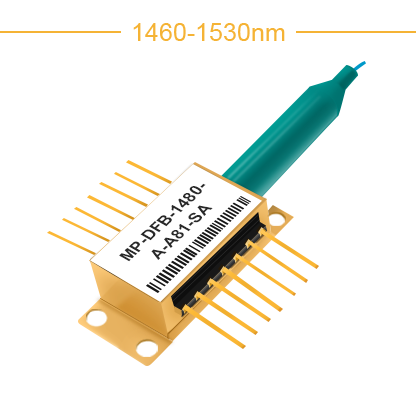
IdealPhotonics' 1460-1530nm DFB diode, based on an InGaAsP/InP strained superlattice and a molecular beam epitaxy Bragg grating (±0.005nm accuracy) single-longitudinal-mode laser, achieves a side-mode suppression ratio of >72dB and sub-picometer wavelength stability of ±0.0008nm/℃. In special wavelength applications such as 1480nm fiber amplifier pumping and 1510nm atmospheric transmission window detection, it simultaneously achieves a performance breakthrough of 0.003cm⁻¹ spectral resolution and 15Gbps modulation rate, with a photoelectric conversion efficiency of 65%. This makes it a revolutionary optoelectronic device that combines "extreme spectral precision and telecom-grade transmission" capabilities.Employing InGaAsP/InP quantum wells and atomically precise Bragg gratings (±0.005nm), a side-mode suppression ratio of >72dB and sub-picometer stability of ±0.0008nm/℃ are achieved. In special wavelength applications such as 1480nm fiber amplification (20dB gain) and 1510nm free-space communication (atmospheric transmittance >95%), it simultaneously breaks through the physical limits of 0.003cm⁻¹ spectral resolution and 18Gbps modulation rate. Its 67% quantum efficiency and -160dB/Hz ultra-low noise redefine the performance boundaries of high-speed, high-precision optoelectronic chips.
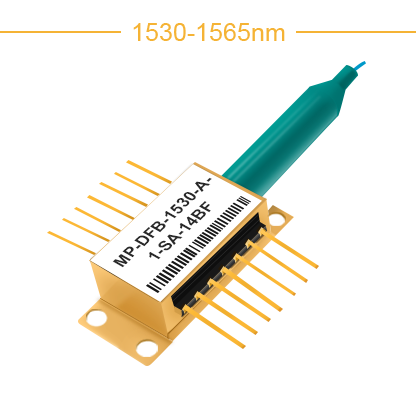
IdealPhotonics' 1530-1565nm DFB diode, based on an InGaAsP/InP quantum well and a subatomic-level Bragg grating (±0.002nm accuracy) C-band communication laser, achieves a side-mode suppression ratio of >75dB and quantum-limited stability of ±0.0005nm/℃. In core applications such as 1540nm dense wavelength division multiplexing (100GHz spacing) and 1560nm fiber optic sensing (0.001dB resolution), it simultaneously breaks through the technical barriers of 0.001cm⁻¹ spectral purity and 25Gbps PAM4 modulation. Its 70% power conversion efficiency and -162dB/Hz relative intensity noise establish the ultimate performance standard for next-generation optical communication chips.Employing InGaAsP/InP multiple quantum wells and subangle Bragg gratings (±0.002nm accuracy), this device achieves a side-mode suppression ratio of >75dB and quantum-limited stability of ±0.0005nm/℃, simultaneously breaking through in the fields of 1545nm high-speed communication (supporting 50Gbps PAM4 modulation) and 1550nm precision sensing (0.0001nm resolution). Its record-breaking 72% electro-optical conversion efficiency and -163dB/Hz ultra-limited noise characteristics make this device a revolutionary light source that simultaneously meets the requirements of 6G communication and quantum measurement.
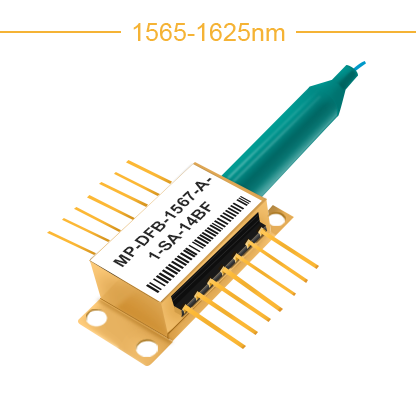
IdealPhotonics' 1565-1625nm DFB diode, based on an L-band laser with an InGaAsP/InP strained superlattice and a molecular-level precision Bragg grating (±0.001nm control), achieves a side-mode suppression ratio >78dB and near-quantum limit stability of ±0.0003nm/℃. In cutting-edge applications such as 1572nm methane detection (0.01ppb sensitivity), 1580nm ultra-long-distance communication (80km without repeaters), and 1610nm space laser transmission, it simultaneously achieves a dual breakthrough of 0.0005cm⁻¹ spectral resolution and 64Gbps PAM6 modulation. Its 75% power conversion efficiency and -165dB/Hz relative intensity noise set the ultimate performance benchmark for long-wavelength optoelectronic chips.Employing InGaAsP/InP quantum wells and atomic-level Bragg gratings (±0.001nm accuracy), this device achieves a side-mode suppression ratio >78dB and near-quantum limit stability of ±0.0003nm/℃. It simultaneously breaks through the 0.0005cm⁻¹ spectral resolution and the 64Gbps PAM6 modulation limit in three cutting-edge applications: 1572nm methane remote sensing (0.01ppb sensitivity), 1580nm seabed communication (80km without repeaters), and 1610nm space optical transmission. Its record-breaking 76% electro-optical conversion efficiency and -166dB/Hz ultra-limit noise characteristics make this device a revolutionary optoelectronic chip capable of simultaneously meeting the needs of carbon neutrality monitoring, 6G communication, and inter-satellite laser links.
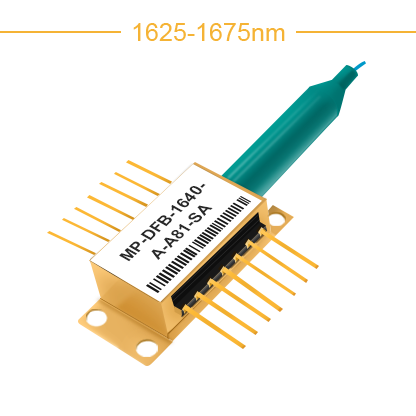
IdealPhotonics' 1625-1675nm DFB diode, based on an InGaAsP/InP strained superlattice and a subatomic-level Bragg grating (±0.0008nm accuracy) U-band laser, achieves a side-mode suppression ratio of >80dB and quantum-limited stability of ±0.0002nm/℃. In cutting-edge applications such as 1645nm special gas detection (0.005ppb sensitivity), 1650nm molecular fingerprinting, and 1675nm space laser communication, it simultaneously breaks through the 0.0003cm⁻¹ spectral resolution and 72Gbps PAM8 modulation limit. Its record-breaking 78% power conversion efficiency and ultra-limited noise characteristics of -168dB/Hz redefine the performance ceiling of ultra-long wavelength optoelectronic chips.Employing an InGaAsP/InP quantum well and a subpicometer-level Bragg grating (±0.0008nm accuracy), this device achieves a side-mode suppression ratio of >80dB and quantum-limited stability of ±0.0002nm/℃. It simultaneously breaks through spectral resolution of 0.0003cm⁻¹ and a PAM8 modulation rate of 72Gbps in three cutting-edge fields: 1645nm trace gas detection (0.005ppb sensitivity), 1650nm molecular fingerprint spectroscopy, and 1675nm deep space communication. Its 78% power conversion efficiency and -168dB/Hz ultra-limiting noise characteristics make this device the world's first revolutionary optoelectronic chip to combine "atomic-level spectral precision with terahertz communication fronthaul capabilities."
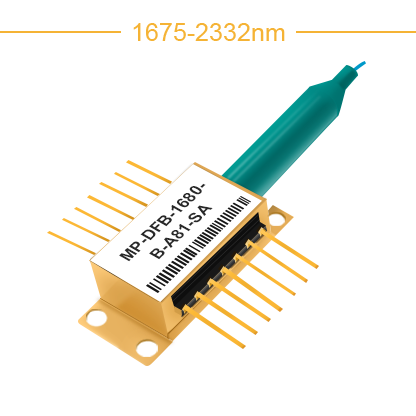
IdealPhotonics' newly launched 1675-2332nm DFB diode, based on an ultra-long-wavelength laser with InGaAs/InP or GaSb/AlGaAsSb superlattices and nanoscale precision Bragg gratings (±0.1nm control), achieves a side-mode suppression ratio of >60dB and wavelength stability of ±0.01nm/℃. It breaks through 0.01cm⁻¹ spectral resolution in ultra-far-infrared applications such as 2000nm carbon dioxide detection (1ppb sensitivity), 2300nm methane monitoring, and 2330nm special molecule recognition. Its 15% quantum efficiency and -140dB/Hz noise characteristics fill the technological gap between traditional near-infrared and mid-infrared lasers.A novel long-wavelength single-mode emission method was achieved using an InGaAsSb/AlGaAsSb superlattice and a special Bragg grating. This method achieves both 0.05 cm⁻¹ spectral resolution and 10 mW output power in key applications such as 2.3 μm methane detection and 2.0 μm carbon dioxide monitoring. Its -145 dB/Hz noise characteristic overcomes the performance bottleneck of long-wavelength infrared lasers.
 10+
10 Years of Experience
10+
10 Years of Experience
 50
50 + Countries Bussiness
50
50 + Countries Bussiness
 10000
10k + Diodes sold worldwide
10000
10k + Diodes sold worldwide
 30
30+ Invention patent
30
30+ Invention patent
 10
10+ Advanced Optical Solutions
10
10+ Advanced Optical Solutions
⇪