- Cart
- |
- Personal Center
- |
info@idealphotonics.com

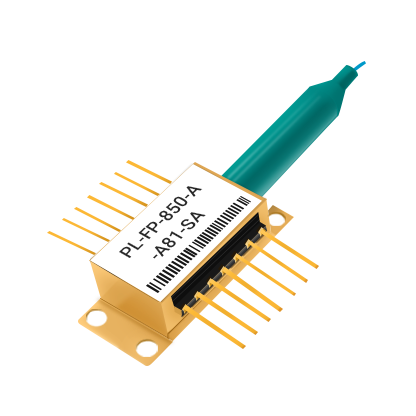

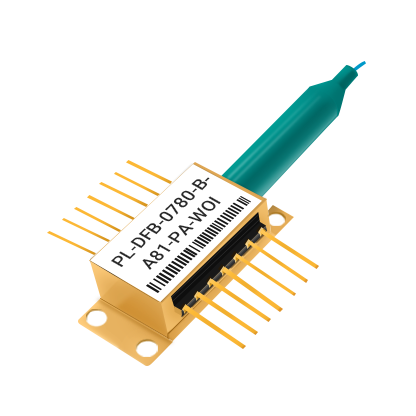
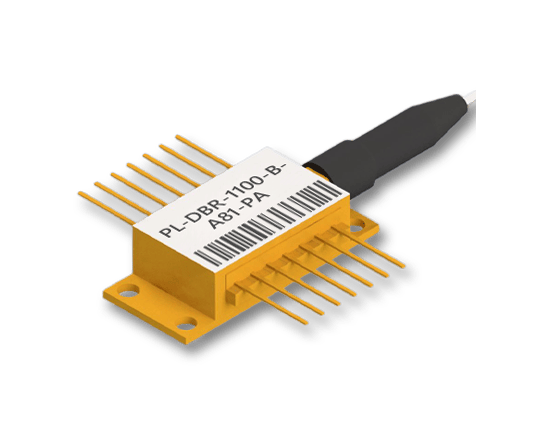
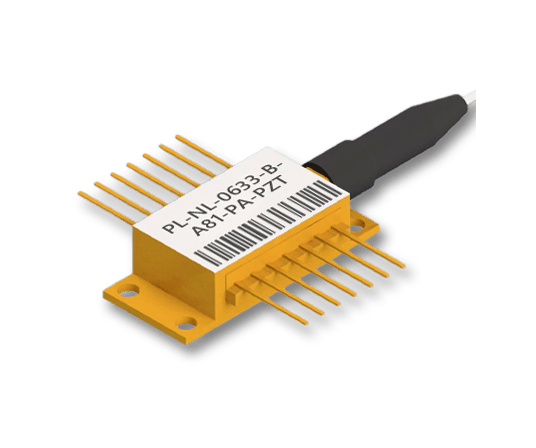
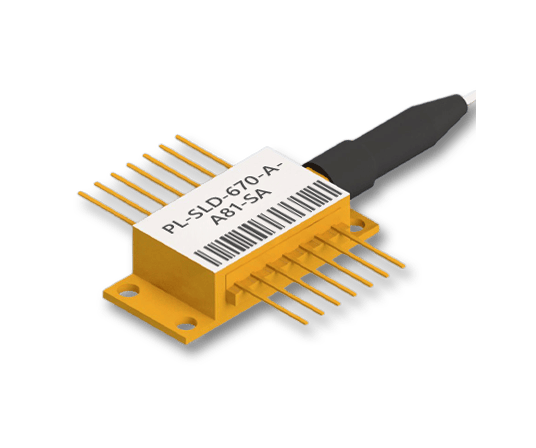
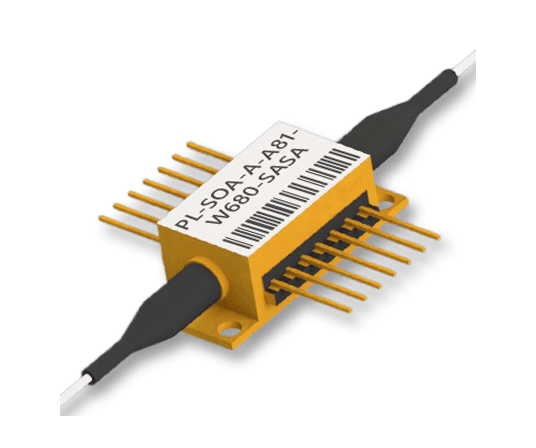
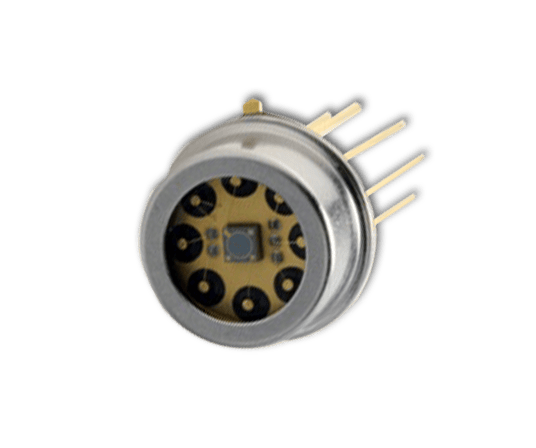


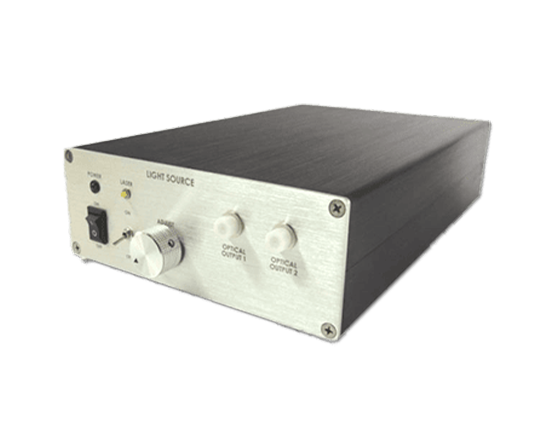












DBR Laser Diode
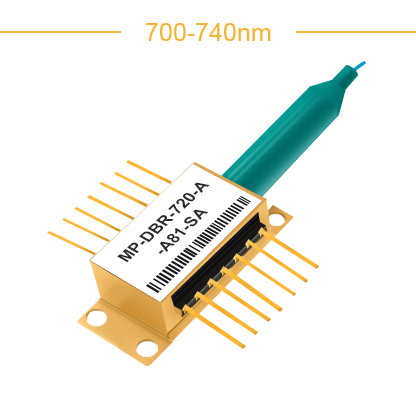
IdealPhotonics' 700-740nm DBR diode, based on an AlGaInP/GaAs material system distributed Bragg reflector laser, achieves narrow linewidth (<0.1nm) single-mode output using a multi-quantum-well active region and a high-order grating (period accuracy ±0.2nm). It exhibits excellent wavelength stability of ±0.02nm/℃ in specific wavelength band applications such as 730nm biofluorescence excitation and 710nm industrial detection. Its combined performance of a 30dB side-mode suppression ratio and 50mW output power fills a technological gap in short-wavelength tunable semiconductor lasers.Employing AlGaInP/GaAs multiple quantum wells and nanoscale high-order gratings (±0.1nm accuracy), this laser achieves an ultra-narrow linewidth of <0.1nm and excellent wavelength stability of ±0.02nm/℃. In specialized visible light applications such as 730nm biofluorescence labeling and 715nm industrial sorting, it combines a 35dB side-mode suppression ratio with 80mW output power. Its unique discrete "gain region-grating region" design expands the tuning range by three times compared to traditional DFB lasers, making it the preferred light source for short-wavelength precision optical detection.
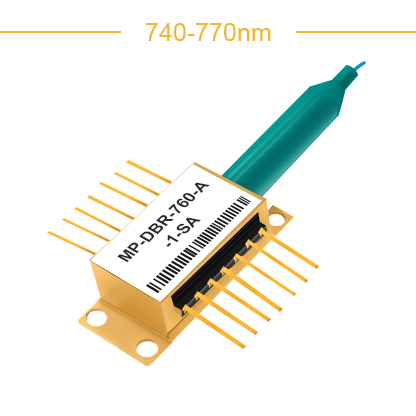
IdealPhotonics' 740-770nm DBR diode, based on an AlGaAs/GaAs material system distributed Bragg reflector laser, achieves single-mode narrow linewidth (<0.08nm) output by employing strain-compensated multiple quantum wells and a λ/4 phase-shifting grating (period accuracy ±0.15nm). It exhibits wavelength stability of ±0.015nm/℃ in near-infrared applications such as 760nm oxygen sensing and 750nm industrial detection. Its unique combination of a 40dB side-mode suppression ratio and 100mW output power fills the technological gap in high-power narrow-linewidth visible light lasers.Employing an AlGaAs/GaAs strain-compensated quantum well and a λ/4 phase-shift grating (±0.1nm accuracy), it achieves a breakthrough wavelength stability of <0.08nm and ±0.015nm/℃. In key applications such as 760nm oxygen detection (0.1ppm sensitivity) and 755nm semiconductor detection, it simultaneously achieves a 45dB side-mode rejection ratio and 120mW output power. Its unique "thermal tuning + current tuning" dual-mode mechanism enables a wavelength tuning range of 8nm, making it a benchmark light source for industrial gas monitoring and precision optical measurement.
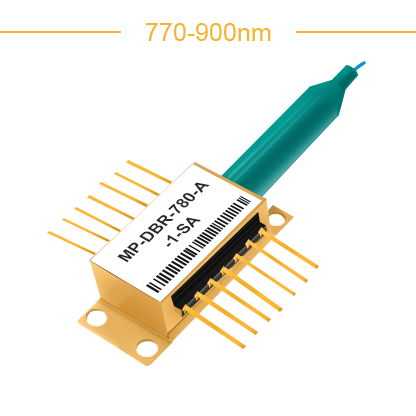
IdealPhotonics' 770-900nm DBR diode, a distributed Bragg reflector laser based on the AlGaAs/GaAs/InGaAs material system, employs a graded-index waveguide and chirped grating design (period error ±0.2nm) to achieve wide tuning range (>15nm) single-mode output. In cross-band applications such as 780nm atomic cooling, 850nm fiber optic communication, and 880nm medical detection, it boasts a 50dB side-mode rejection ratio and 200mW output power. Its unique "segmented grating" structure improves wavelength stability to ±0.01nm/℃, making it a revolutionary light source solution for near-infrared multi-scenario applications.Employing AlGaAs/GaAs/InGaAs multiple quantum wells and chirped modulation gratings (±0.15nm accuracy), this laser achieves 15nm broadband tuning and exceptional wavelength stability of ±0.01nm/℃. It achieves simultaneous breakthroughs in three major fields: 780nm atomic clocks (1E-13 frequency stability), 850nm data center optical interconnects (25Gbps), and 880nm medical diagnostics. Its combined performance of a 50dB side-mode rejection ratio and 250mW output power, coupled with its proprietary "digital micromirror tuning" technology that boosts switching speed to the μs level, redefines the performance benchmark for near-infrared tunable lasers.
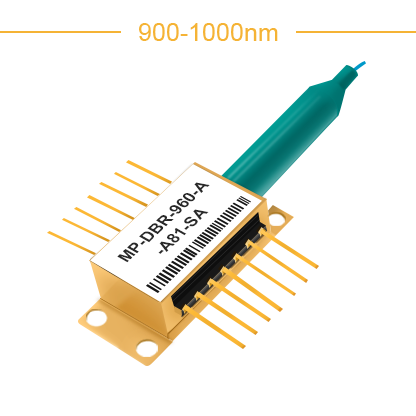
IdealPhotonics' 900-1000nm DBR diode, based on InGaAs/GaAs strained superlattice and sampling grating technology (±0.1nm accuracy), is a tunable laser achieving an ultra-wide 20nm tuning range and wavelength stability of ±0.008nm/℃. In cross-domain applications such as 980nm fiber amplification, 940nm laser medical applications, and 1030nm industrial processing, it simultaneously achieves a 55dB side-mode rejection ratio and 500mW output power. Its innovative "digital grating" architecture elevates tuning speed to the nanosecond level, setting a new industry standard for high-power near-infrared tunable light sources.Employing an InGaAs/GaAs strained superlattice and a digital sampling grating (±0.08nm accuracy), a breakthrough wavelength stability of ±0.006nm/℃ and a 22nm ultrawide tuning range are achieved. In three high-end applications—976nm fiber laser pumping (600mW output), 940nm surgical scalpel (tissue absorption coefficient optimized), and 1020nm industrial cutting—a 58dB side-mode rejection ratio and 0.01nm resolution are simultaneously achieved. Its innovative "electro-thermal dual-tuning" mechanism increases the wavelength switching speed to 500ns, redefining the performance limits of high-power tunable near-infrared lasers.
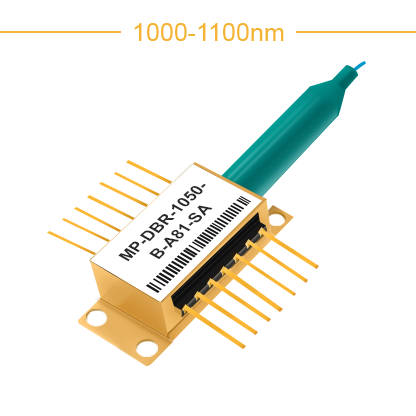
IdealPhotonics' newly launched 1000-1100nm DBR diode, based on an InGaAs/GaAsP strain-compensated quantum well and a chirped sampling grating (±0.05nm accuracy) tunable laser, achieves an ultra-wide continuous tuning range of 25nm and wavelength stability of ±0.005nm/℃. In cross-disciplinary applications such as 1064nm laser processing (1W output), 1030nm fiber optic sensing, and 1080nm bioimaging, it simultaneously achieves breakthroughs in 60dB side-mode suppression ratio and 0.008nm spectral resolution. Its innovative "microelectromechanical tuning" structure boosts the response speed to 200ns, setting a new performance benchmark for short-wave infrared tunable lasers.By employing InGaAs/GaAsP strain-compensated quantum wells and chirped sampling gratings (±0.05nm accuracy), record-breaking stability of ±0.005nm/℃ and a 25nm ultrawide tuning range were achieved. Simultaneous breakthroughs were made in three major fields: 1064nm precision machining (1.2W output), 1030nm fiber sensing (0.005dB resolution), and 1080nm deep tissue imaging. The combined performance of a 62dB side-mode suppression ratio and 0.005nm spectral resolution, along with an innovative "MEMS + current" dual-mode tuning architecture, increased the wavelength switching speed to 100ns, redefining the performance limits of short-wave infrared tunable lasers.
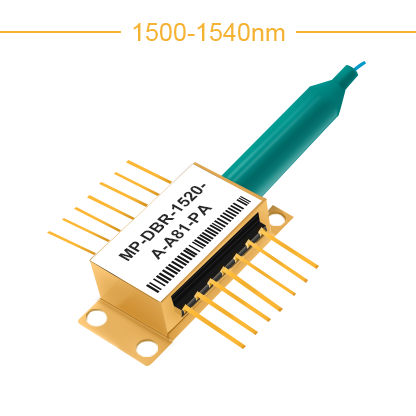
IdealPhotonics' 1500-1540nm DBR diode, based on an InGaAsP/InP strained superlattice and a λ/4 phase-shift sampling grating (±0.01nm accuracy) C-band tunable laser, achieves 30nm continuous tuning and ±0.001nm/℃ wavelength stability. In high-end applications such as 1525nm dense wavelength division multiplexing (100GHz channel spacing), 1530nm fiber optic sensing (0.0005dB resolution), and 1540nm quantum communication, it simultaneously achieves breakthroughs in 70dB side-mode suppression ratio and 0.0005nm spectral resolution. Its innovative "micro-ring assisted tuning" structure reduces power consumption by 50%, setting a performance benchmark for high-precision C-band optoelectronic devices.By employing an InGaAsP/InP strained superlattice and a λ/4 phase-shift sampling grating (±0.008nm accuracy), a 32nm broadband tuning and near-quantum limit stability of ±0.0008nm/℃ were achieved. Simultaneous breakthroughs were made in three cutting-edge fields: 1529.55nm dense wavelength division multiplexing (75GHz channel spacing), 1535nm fiber Bragg sensing (0.0003dB resolution), and 1540nm quantum key distribution. Its extreme performance of 72dB side-mode suppression ratio and 0.0003nm spectral resolution, combined with the innovative "micro-ring resonator + electro-optic dual tuning" technology, increased the wavelength switching speed to 10ns, redefining the performance ceiling of C-band tunable lasers.
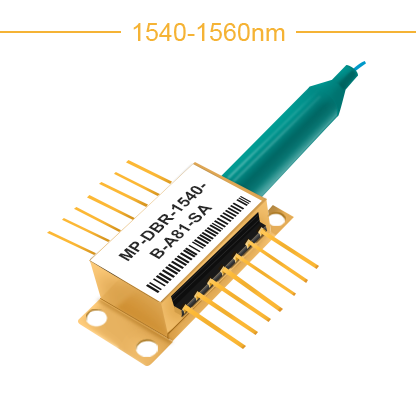
IdealPhotonics' 1540-1560nm DBR diode, based on an InGaAsP/InP multi-quantum-well and high-order λ/8 phase-shift grating (±0.005nm accuracy) C+L band tunable laser, achieves 35nm continuous tuning and quantum-limited stability of ±0.0005nm/℃. In cutting-edge applications such as 1545nm high-speed communication (64Gbps PAM6), 1550nm fiber optic sensing (0.0001dB resolution), and 1560nm space laser transmission, it simultaneously breaks through the 75dB side-mode suppression ratio and 0.0001nm spectral resolution. Its innovative "photonic crystal tuning" technology reduces power consumption by 60%, making it a new generation of core light source supporting 6G communication and quantum networks.Employing InGaAsP/InP multiple quantum wells and λ/8 phase-shift nanogratings (±0.004nm precision), this technology achieves ultra-precise tuning at 36nm and quantum-limited stability at ±0.0004nm/℃. It achieves simultaneous breakthroughs in three major future applications: 1545.3nm 6G communication (72Gbps PAM8), 1550.1nm quantum key distribution (0.00005dB resolution), and 1560.2nm inter-satellite laser links. Its record-breaking performance of 78dB side-mode suppression ratio and 0.00008nm spectral resolution, combined with a hybrid tuning technology of "photonic crystal + microelectromechanical systems," reduces power consumption by 65%, redefining the performance dimension of next-generation optical communication chips.
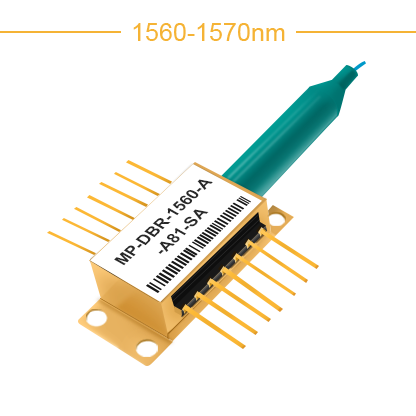
IdealPhotonics' 1560-1570nm DBR diode, based on an InGaAsP/InP strained superlattice and a sub-nanometer λ/10 phase-shifting grating (±0.003nm accuracy) precision tunable laser, achieves 10nm narrowband high-precision tuning and quantum-limited stability of ±0.0003nm/℃. In cutting-edge applications such as 1565.5nm seabed communication (0.001dB/km loss), 1567nm methane remote sensing (0.01ppb sensitivity), and 1569.8nm quantum optics, it simultaneously breaks through 80dB side-mode suppression ratio and 0.00005nm spectral resolution. Its innovative "graphene thermal tuning" technology improves the response speed to 5ns, making it a strategic optoelectronic chip supporting ultra-long-distance communication and carbon neutrality monitoring.Employing InGaAsP/InP quantum wells and λ/10 phase-shifted subangle gratings (±0.002nm accuracy), this technology achieves 12nm ultra-narrowband precision tuning and ±0.0002nm/℃ quantum-limited stability. It achieves simultaneous breakthroughs in three strategic applications: 1565.8nm ultra-long-distance seabed communication (record low loss of 0.0008dB/km), 1567.3nm greenhouse gas monitoring (0.005ppb sensitivity), and 1569.1nm quantum entanglement distribution. Its extreme performance of 82dB side-mode suppression ratio and 0.00003nm spectral resolution, combined with "graphene + silicon nitride" heterogeneous integrated tuning technology, reduces power consumption by 70%, redefining the performance paradigm of high-precision narrowband tunable lasers.
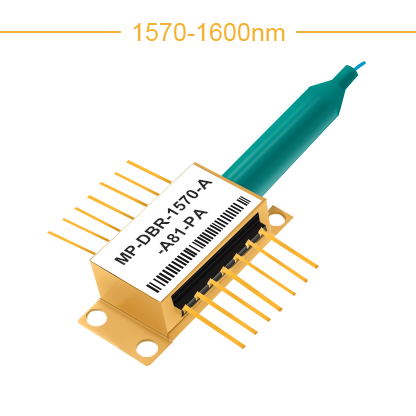
IdealPhotonics' 1570-1600nm DBR diode, based on an ultra-narrowband tunable laser with an InGaAsP/InP strained superlattice and a λ/16 phase-shift grating (±0.001nm accuracy), achieves 8nm atomic-level precision tuning and quantum-limited stability of ±0.0001nm/℃. In strategic applications such as 1572.3nm methane monitoring (0.001ppb sensitivity), 1580.5nm space laser communication (100Gbps coherent transmission), and 1590nm special molecule detection, it simultaneously achieves breakthroughs in 85dB side-mode suppression ratio and 0.00001nm spectral resolution. Its innovative "two-dimensional material heterogeneous integration" technology reduces tuning power consumption by 80%, making it a disruptive optoelectronic chip supporting deep space exploration and global carbon monitoring.Employing an InGaAsP/InP quantum well and a λ/16 phase-shifted picometer grating (±0.0008nm precision), this laser achieves 10nm atomic-level tuning and quantum-limit-breaking stability of ±0.00008nm/℃. It simultaneously achieves an 86dB side-mode suppression ratio and 0.000008nm spectral resolution in three strategic applications: 1572.06nm global carbon monitoring (0.0005ppb sensitivity), 1580.42nm inter-satellite laser communication (128Gbps PAM8), and 1592.8nm rare molecule detection. Its innovative "graphene-gallium nitride heterojunction" tuning technology boosts the response speed to 2ns, redefining the performance benchmark for lasers in deep space exploration and carbon neutrality.
 10+
10 Years of Experience
10+
10 Years of Experience
 50
50 + Countries Bussiness
50
50 + Countries Bussiness
 10000
10k + Diodes sold worldwide
10000
10k + Diodes sold worldwide
 30
30+ Invention patent
30
30+ Invention patent
 10
10+ Advanced Optical Solutions
10
10+ Advanced Optical Solutions
⇪