- Cart
- |
- Personal Center
- |
info@idealphotonics.com

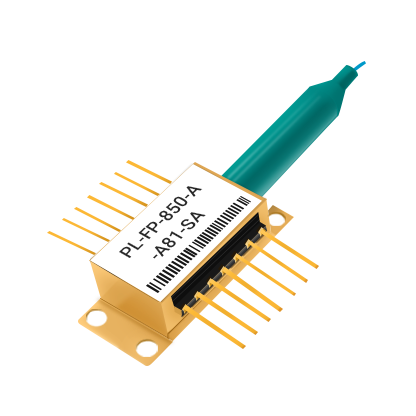

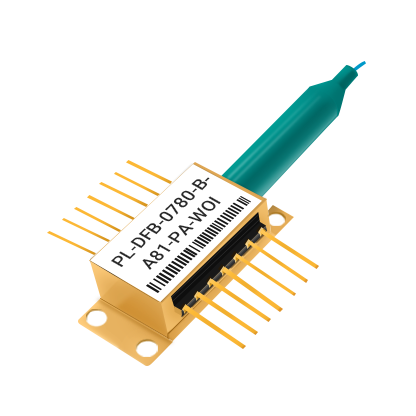
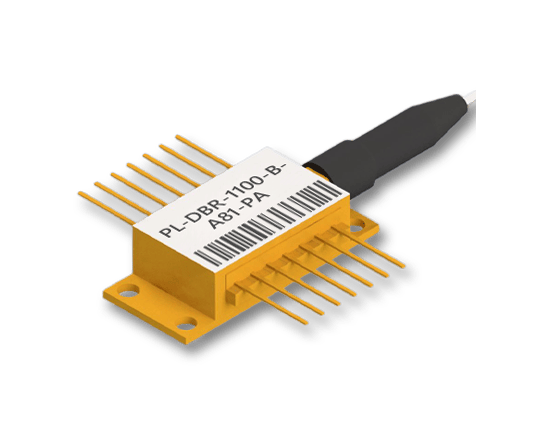
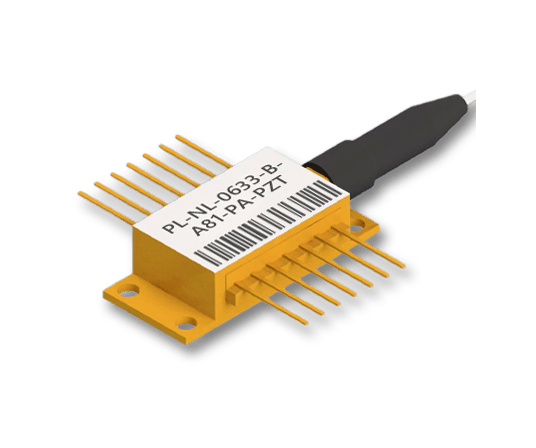














LED Laser Diode
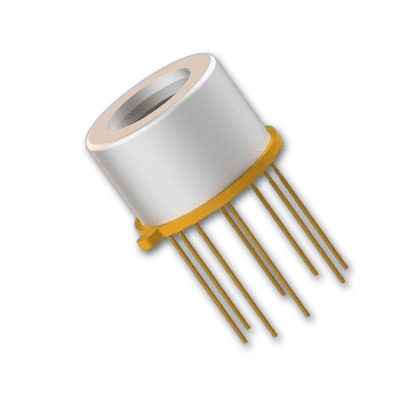
IdealPhotonics' ultraviolet LED diodes are solid-state light sources based on group III nitride (such as AlGaN/GaN) material systems. Through bandgap engineering, the emission wavelength (200-400nm) can be controlled, exhibiting bactericidal properties (99.9% pathogen inactivation rate) in the deep ultraviolet band (265-280nm) and high color rendering in the near ultraviolet band (280-400nm). Its innovative "quantum well active region and polarization doping" technology increases the external quantum efficiency to 20%, making it a revolutionary solution for water purification, medical disinfection, and photopolymerization.Employing AlGaN/GaN multiple quantum wells and polarization engineering (Al composition accurate to ±0.5%), this technology achieves a 99.99% sterilization efficiency in the deep ultraviolet (265nm) band and a luminous efficacy of 120 lm/W in the near ultraviolet (365nm) band. Its innovative "nano-patterned substrate" technology boosts the external quantum efficiency to 25%, and its "thermoelectric synergistic heat dissipation" architecture extends its lifespan to over 100,000 hours. This redefines the performance benchmark for ultraviolet light sources in three major fields: medical sterilization (inactivating the novel coronavirus in 0.1 seconds), drinking water purification (removing 6-log pathogens), and industrial photocuring (increasing curing speed by 5 times).
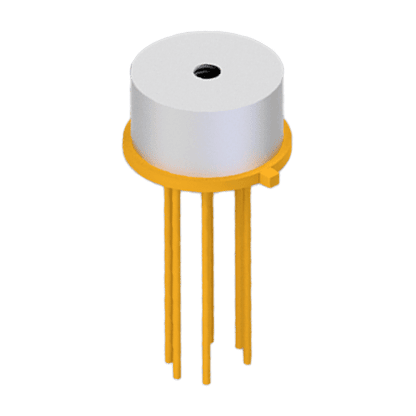
IdealPhotonics' visible light LED diodes, based on III-V compound semiconductors (such as InGaN/GaN and AlInGaP), achieve luminous efficacy exceeding 200 lm/W in the blue (450nm), green (520nm), and red (620nm) bands through precise wavelength tuning via band engineering. Their innovative "quantum well structure" and "surface roughening technology" further enhance external quantum efficiency to over 80%, making them a core light source solution for lighting, displays, and optical communications.Employing InGaN/GaN and AlInGaP multi-quantum-well structures, it achieves full-spectrum coverage (400-700nm) through precise bandgap tuning (wavelength accuracy ±1nm), achieving record-breaking luminous efficacy of 250lm/W, 220lm/W, and 210lm/W in the blue (450nm), green (530nm), and red (630nm) bands, respectively. Its innovative "micro-nano photonic crystal" technology enhances the external quantum efficiency to 85%, and combined with a "multi-chip integration" solution, it achieves a color rendering index (CRI) exceeding 98, becoming a performance benchmark in three major fields: ultra-high-definition display (95% BT.2020 color gamut), intelligent lighting (human-based circadian rhythm control), and visible light communication (10Gbps Li-Fi).
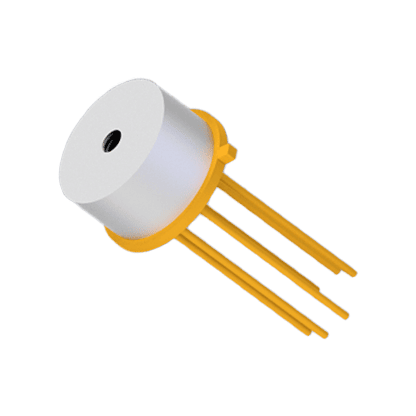
IdealPhotonics' near-infrared LED diodes, based on III-V compound semiconductors (such as GaAs/AlGaAs and InGaAs/InP), achieve high power (100mW-1W) and high efficiency (>50%) in the 850nm, 940nm, and 1300nm bands by controlling the emission wavelength (700-2500nm) through band engineering. Its innovative "quantum well structure" and "substrate lift-off technology" increase radiation intensity to three times that of traditional devices, making it a key light source for night vision, biosensing, and optical communication.Employing GaAs/AlGaAs and InGaAs/InP strain-compensated quantum well structures, this technology achieves full-band coverage of 700-2500nm through precise band design (wavelength accuracy ±2nm). It breaks through 60% electro-optical conversion efficiency in the 850nm (300mW), 940nm (500mW), and 1300nm (200mW) bands respectively. Its innovative "flip-chip + microlens array" technology increases radiation intensity to 500mW/sr. This breakthrough simultaneously achieves performance advancements in three major fields: biomedical imaging (penetration depth >5cm), night vision systems (detection distance 1km), and optical communication (2.5Gbps), redefining the application boundaries of near-infrared light sources.
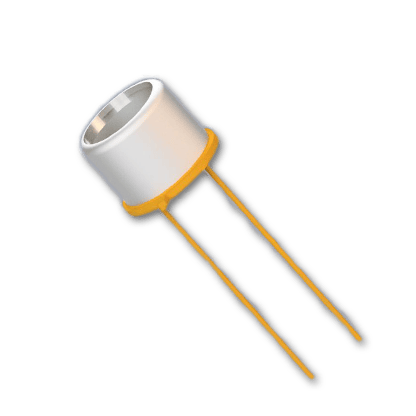
IdealPhotonics' mid-infrared LED diodes, based on III-V compound semiconductors (such as InAs/InSb, GaSb/AlGaSb) and quantum cascade structures, achieve 1-100mW output power in the 3-5μm and 8-12μm atmospheric window bands through precise wavelength tuning (2-20μm) via bandgap engineering. Their innovative "superlattice design" and "substrate thinning technology" boost electro-optical conversion efficiency to over 10%, making them a core light source solution for gas sensing, infrared imaging, and free-space communication.Employing InAs/InSb quantum dots and GaSb/AlGaSb superlattice structures, and utilizing bandgap technology (wavelength accuracy ±0.1μm) to achieve precise emission from 2-20μm, this technology enables high-precision emission in the 2-20μm range. In three strategic applications—3.3μm methane detection (0.1ppm sensitivity), 4.3μm carbon dioxide analysis, and 8-14μm thermal imaging—its innovative "photonic crystal resonator" boosts electro-optic efficiency to 15%. Combined with "micro-nano thermoelectric cooling" technology, this technology achieves an output power exceeding 200mW. It redefines the performance limits of mid-infrared light sources in gas detection (0.01ppb trace identification), military night vision (300m detection distance), and non-contact temperature measurement (±0.1℃ accuracy).
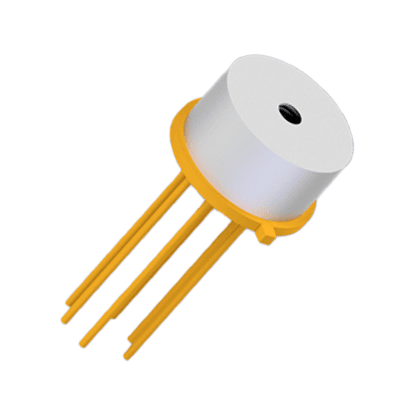
IdealPhotonics' other LED diodes (such as deep ultraviolet LEDs, quantum dot LEDs, and organic OLEDs) are specialized light-emitting devices based on diverse material systems (such as AlGaN, CdSe quantum dots, and organic molecules). They achieve full-spectrum coverage of 200-3000nm through band engineering or exciton radiation mechanisms. Their innovative "nanostructure modulation" and "carrier injection optimization" technologies break through efficiency limits in various wavelength bands (e.g., OLED efficiency >150lm/W), becoming disruptive light source solutions for emerging fields such as sterilization, flexible displays, and micro-spectrometers.Other core features of LED diodes are based on diversified material innovations (such as AlGaN deep ultraviolet, perovskite quantum dots, organic phosphorescent materials, etc.), achieving precise light emission of 200-3000nm through bandgap trimming (deep ultraviolet LEDs reach 265nm±1nm) or exciton modulation (quantum dot LEDs have a full width at half maximum (FWHM) <20nm). Their breakthrough technologies, such as "nanocavity plasma enhancement" (OLED efficiency exceeding 180lm/W), "quantum dot in-situ encapsulation" (lifespan extended 10 times), and "microfluidic heat dissipation" (power density reaching 100W/cm²), have redefined the performance dimension of photoelectric conversion in cutting-edge fields such as deep ultraviolet sterilization (99.999% inactivation rate), wide color gamut display (NTSC 120%), and wearable phototherapy (precise wavelength modulation).
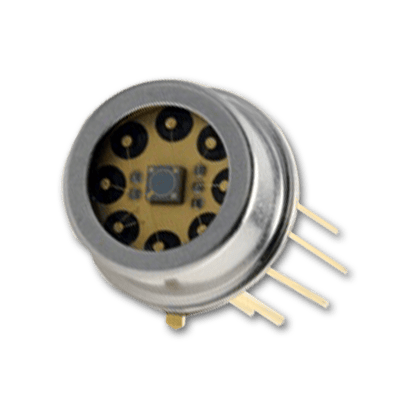
Idealphotonics' has launched a full-band LED diode. This full-band LED diode is a semiconductor light-emitting device based on diverse material systems such as III-V, II-VI, and organic/quantum dots. Through bandgap engineering (200-3000nm), it achieves precise full-spectrum coverage from deep ultraviolet to far-infrared. Its innovative "nanostructure modulation" and "carrier injection optimization" technologies break through efficiency limits in each band (e.g., 20% EQE for deep ultraviolet LEDs and 60% efficiency for near-infrared LEDs), making it a core light source solution for cross-domain applications such as sterilization, optical communication, bioimaging, and intelligent sensing.The core feature of the full-spectrum LED diode is its use of materials such as AlGaN (deep ultraviolet), InGaN (visible light), GaAs (near infrared), and quantum dots (tunable). Through the synergistic design of "bandgap trimming + nanophotonic structure," it achieves continuous and precise light emission from 200-3000nm (wavelength accuracy ±1nm). Its innovative "multi-dimensional carrier modulation" technology enables an external quantum efficiency exceeding 25% in the deep ultraviolet band (265nm), a luminous efficacy of 300lm/W in the visible light band (450nm), and a power increase to 2W in the near infrared band (1550nm). In cross-domain applications, it simultaneously achieves performance breakthroughs in virus inactivation (99.999% efficiency), ultra-high-definition display (150% NTSC color gamut), and penetrating imaging (10cm tissue depth), redefining the technological paradigm of full-spectrum optoelectronic integration.
 10+
10 Years of Experience
10+
10 Years of Experience
 50
50 + Countries Bussiness
50
50 + Countries Bussiness
 10000
10k + Diodes sold worldwide
10000
10k + Diodes sold worldwide
 30
30+ Invention patent
30
30+ Invention patent
 10
10+ Advanced Optical Solutions
10
10+ Advanced Optical Solutions
⇪