- Cart
- |
- Personal Center
- |
info@idealphotonics.com




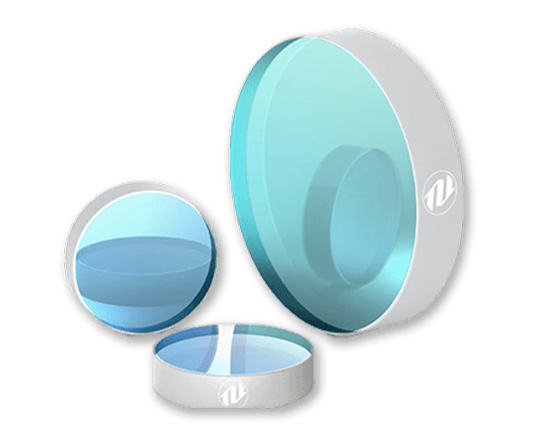
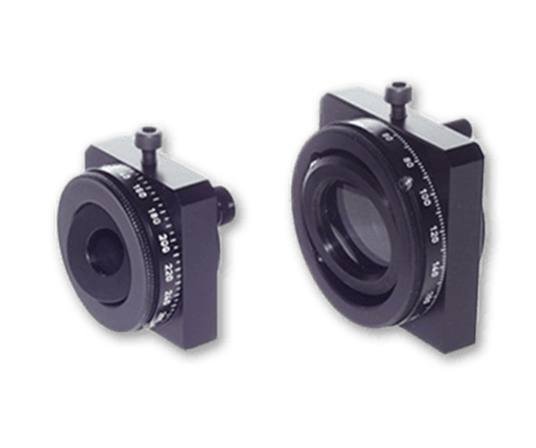
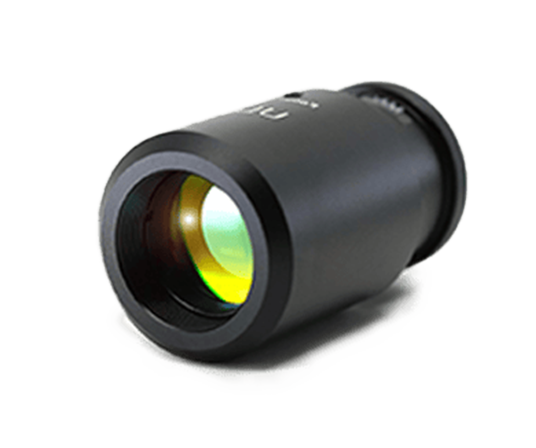
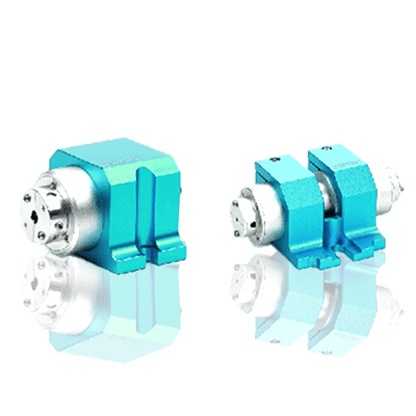











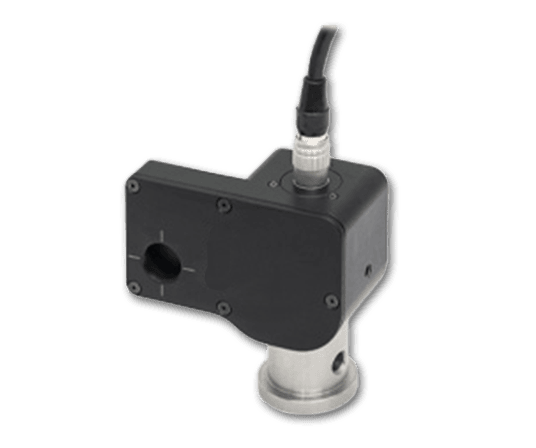
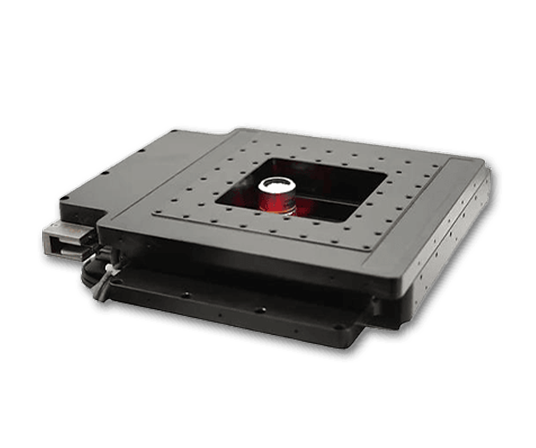

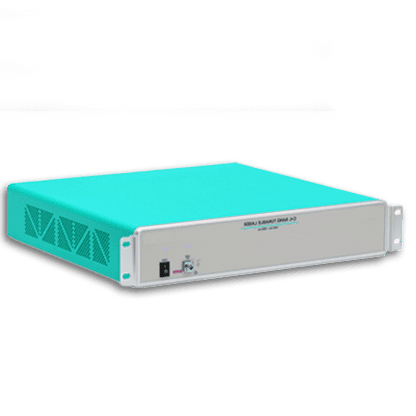
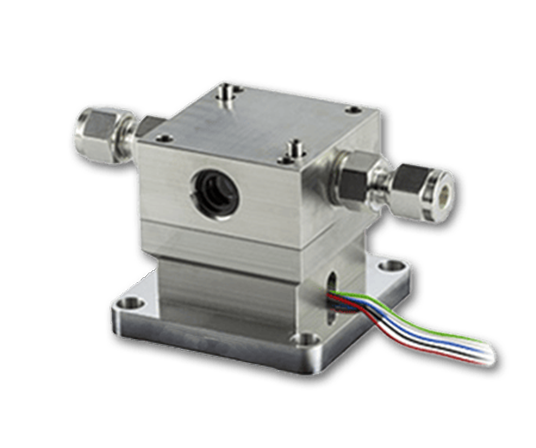

Vortex Waveplate
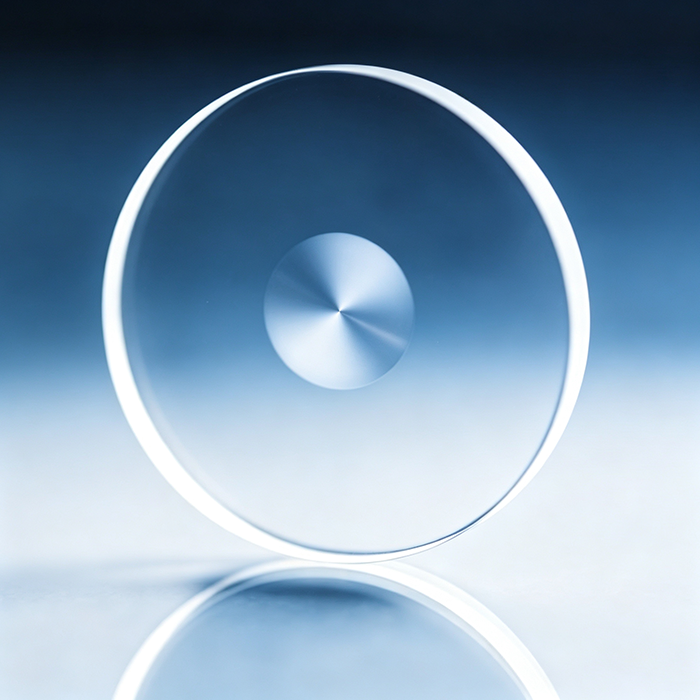
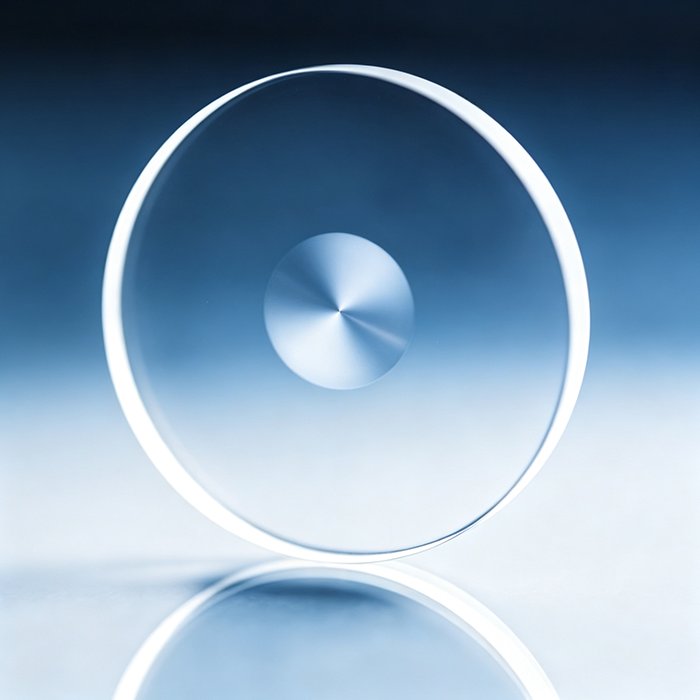
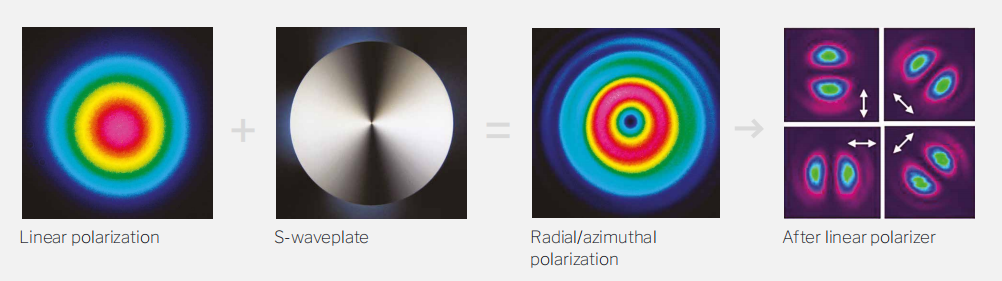
The Vortex Waveplate is a special polarization optical element based on a space-variant retarder (SVR) structure. It spatially modulates the polarization state of an incident laser beam to generate structured light fields such as radial polarization, azimuthal polarization, higher-order cylindrical vector polarization, and optical vortices. The standard Vortex Waveplate converts linearly polarized light into radially or azimuthally polarized light, and converts circularly polarized light into an optical vortex. The higher-order S-Waveplate further supports the conversion of linear polarization into higher-order spatial polarization distributions and can generate optical vortices with larger topological charges - up to 2-100 for higher-order products. The device is fabricated by writing self-organized nanogratings inside fused silica using femtosecond laser technology. The functional structure is embedded inside the glass without any cemented components, offering high transmittance, high laser-induced damage threshold (LIDT), and excellent thermal stability, making it suitable for high-power and ultrafast laser systems.
Product features:Efficient conversion to radial, azimuthal, and higher‑order vortex beams;High transmittance and low loss;High laser damage threshold, suitable for high‑power and ultrafast lasers;Nanostructure inside fused silica for robust and durable operation;Supports higher‑order modes and large clear apertures
Part Number:MP-HOS-800-02-AR
Application area:Laser precision machining and micro‑drilling | Structured light and vortex beam generation | STED and other super-resolution microscopy | Optical tweezers and particle manipulation | High-numerical-aperture focusing | Intra-cavity polarization control in lasers
Add to Cart Request for Quotation Consult Favorite
Transmittance Laser‑Induced Damage Threshold Maximum Clear Aperture
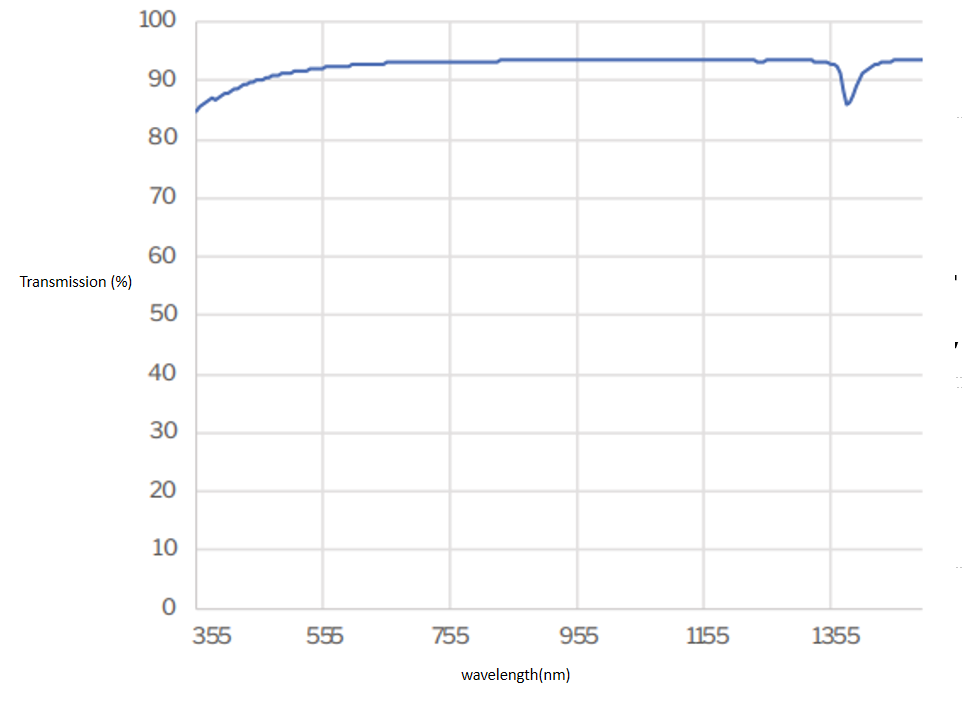
94% @ 1030 nm; 92% @ 515 nm; 85% @ 343 nm (uncoated) 63.4 J/cm² @ 1064 nm, 10 ns; 2.2 J/cm² @ 1030 nm, 212 fs 15 mm
Parameter | Specification |
Polarization conversion | Linear → higher-order spatial polarization; Circular → optical vortex |
Polarization conversion efficiency | Up to 100% |
Topological charge | Standard options: 2, 4, 6, 8, 10, 15; higher orders available on request |
Typical operating wavelengths | 488, 515, 632, 800, 1030, 1550 nm, etc. |
Typical wavelength bandwidth | 488±15 nm; 515±20 nm; 632±20 nm; 800±25 nm; 1030±35 nm; 1550±40 nm |
Standard clear aperture | 6 mm |
Maximum clear aperture | 15 mm |
Substrate material | UVFS fused silica (Corning 7980) |
Outer diameter | 25.4 mm |
Thickness | 3 mm |
Transmittance (uncoated) | >85% @488 nm; >92% @515/632/800 nm; >94% @1030/1550 nm |
Transmittance (AR‑coated) | >90% @488 nm; >97% @515/632/800 nm; >99% @1030/1550 nm |
Laser‑induced damage threshold (LIDT) | 63.4 J/cm² @1064 nm, 10 ns; 2.2 J/cm² @1030 nm, 212 fs |
Structure | Continuous space‑variant nanograting, no segmented structure |
Manufacturing process | Femtosecond laser writing of nanogratings inside fused silica |
Cemented components | None |
AR coating | Optional |
Schematic of Polarization Conversion Principle
Fast-Axis Orientation Distribution
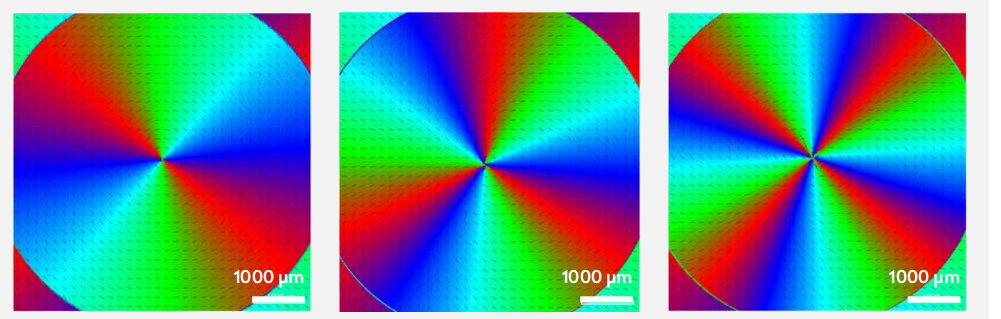
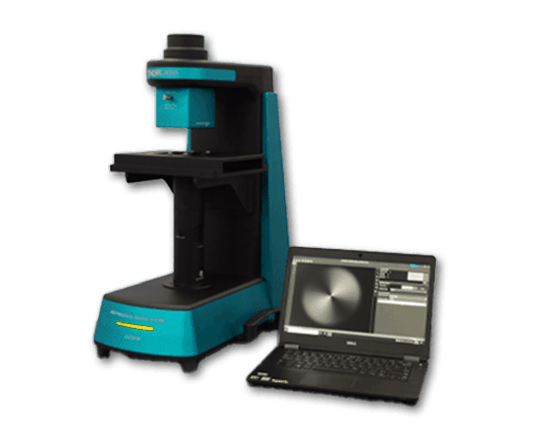
Higher-order S-Waveplates convert linearly polarized light into higher-order polarization patterns. The figure shows examples of fast-axis patterns for 2nd-order (left), 3rd-order (center), and 4th-order (right) S-Waveplates (measured with a Hinds Instruments Exicor MicroImager).
Spatial Intensity Distribution
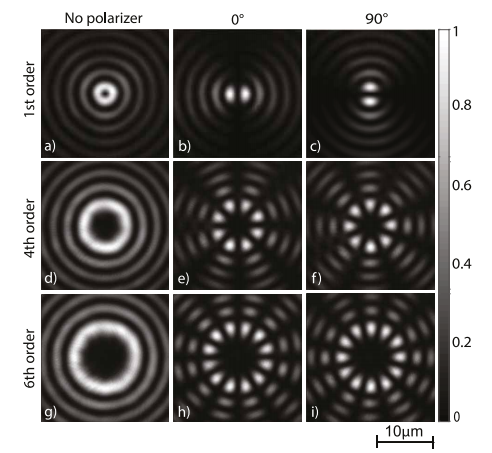
Spatial intensity profiles of 1st‑, 4th‑, and 6th‑order vector Bessel‑Gauss beams (a, d, g) and their single‑polarization‑component spatial intensity distributions when the polarizer is rotated to two different angles. The second column shows the intensity profiles when the polarizer is parallel to the incoming polarization (0°), and the third column shows those when the polarizer is perpendicular (90°).
Uncoated Vortex Waveplate Transmission Curve
Request for Quotation
We will reply to all your information about the product in time.
 10+
10 Years of Experience
 50
50 + Countries Bussiness
 10000
10k + Diodes sold worldwide
 30
30+ Invention patent
 10
10+ Advanced Optical Solutions
⇪