- Cart
- |
- Personal Center
- |
info@idealphotonics.com

















Optical Components

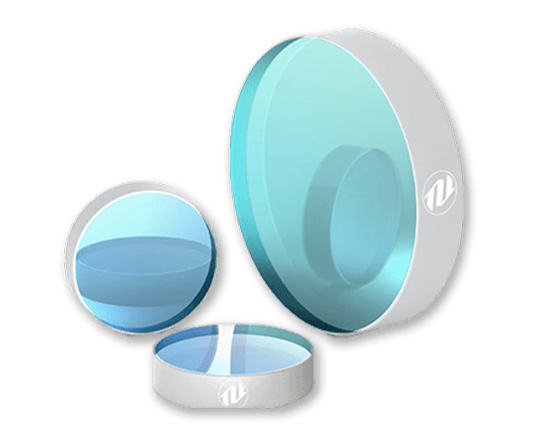
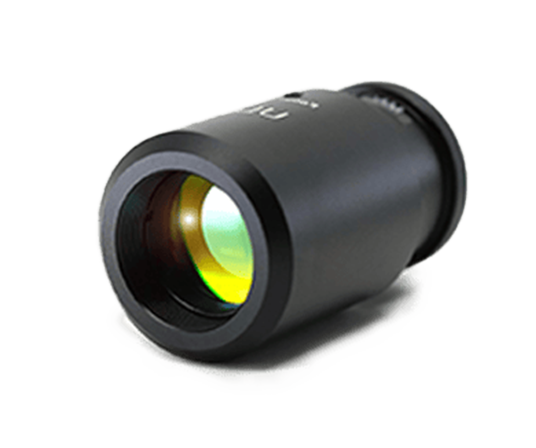
IdealPhotonics' optical lens is an optical element designed using the principle of light refraction. It is typically made of transparent materials (such as glass, plastic, or crystal) and has at least one curved surface (or a combination of a flat and curved surface). Its core function is to control the direction of light propagation, focal point, or imaging characteristics by changing the propagation path of light, thereby converging, diverging, or collimating it.By precisely controlling the behavior of light through geometry and material properties, it serves a wide range of fields, including imaging, illumination, and measurement. Its design requires a balance between functionality, performance, and cost, making it a cornerstone of modern optical technology.

The reflector introduced by Idealphotonics' is an optical element that uses the law of reflection (the angle of incidence equals the angle of reflection) to change the direction of light propagation.It controls the light path through a reflective surface (rather than refraction), and is typically composed of a polished surface with high reflectivity (such as a metal coating or dielectric film).

IdealPhotonics' optical filters are optical elements that selectively transmit or reflect light waves of specific wavelengths (or frequencies) to control the spectral composition of light.They allow light of the target wavelength band to pass through while blocking or attenuating other unwanted wavelengths, thereby achieving the filtering, enhancement, or suppression of optical signals.

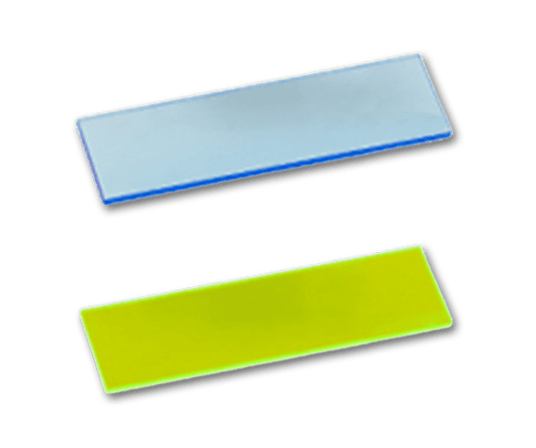
IdealPhotonics' optical window, a high-transmittance planar optical element, is primarily used to isolate different physical environments (such as vacuum/atmosphere, high pressure/low pressure) or protect internal components of optical systems while maintaining efficient optical signal transmission.It maintains high transmittance and physical stability in extreme environments, providing reliable environmental isolation protection while achieving interference-free optical path transmission.

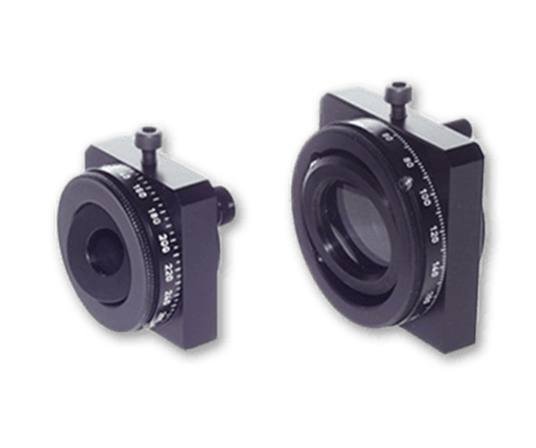
IdealPhotonics' test targets, stage micrometers, and crosshairs serve as standardized pattern references for optical system resolution testing and image quality assessment; precision scales for length calibration in microscope systems; and crosshairs or grid plates providing alignment references in optical instruments.These components collectively constitute the "reference triangle" in optical measurement—the test target verifies the system's ultimate performance, the micrometer ensures dimensional accuracy, and the crosshairs guarantee operational precision.

A diffractive optical element (DOE) is a precision optical element based on the principle of light diffraction and computer-aided design. By etching micro/nano-scale complex relief structures (such as blazed gratings, lens arrays, and pixelated phase patterns) on the surface of a substrate material, it precisely manipulates the wavefront phase of light waves, thereby achieving customized distribution control of the optical field.
Single-crystal diamond, a continuous and complete crystal formed by pure carbon atoms bonded through sp³ hybridization, is an ultimate functional material with a single crystallographic orientation (e.g., (100)/(111) planes).
Crystal materials are solid substances composed of atoms, ions, or molecules arranged strictly periodically in three-dimensional space, with the core feature being a lattice structure with translational symmetry. This long-range orderliness results in anisotropic physical properties and the existence of clear phase transition critical points (such as melting points).
Atoms/molecules exhibit strict periodic arrangement in three-dimensional space, with long-range ordered lattice structure and anisotropic physical properties. Their determined melting point, diffraction characteristics, and controllable defects make them the cornerstone of functional material design.
 10+
10 Years of Experience
 50
50 + Countries Bussiness
 10000
10k + Diodes sold worldwide
 30
30+ Invention patent
 10
10+ Advanced Optical Solutions
⇪