- Cart
- |
- Personal Center
- |
info@idealphotonics.com


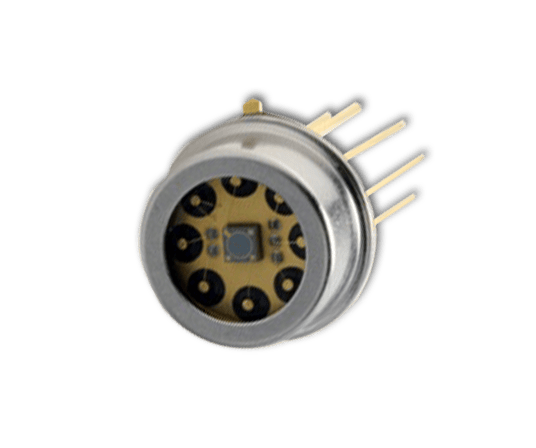


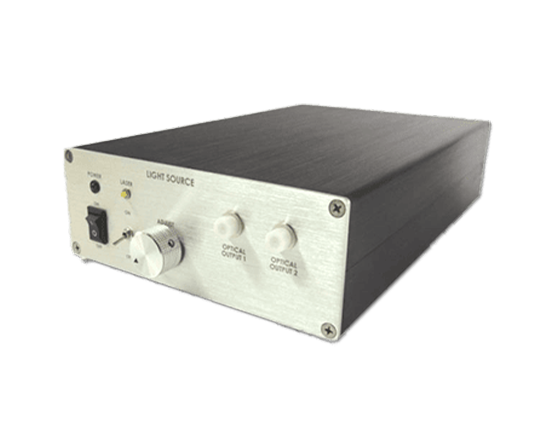
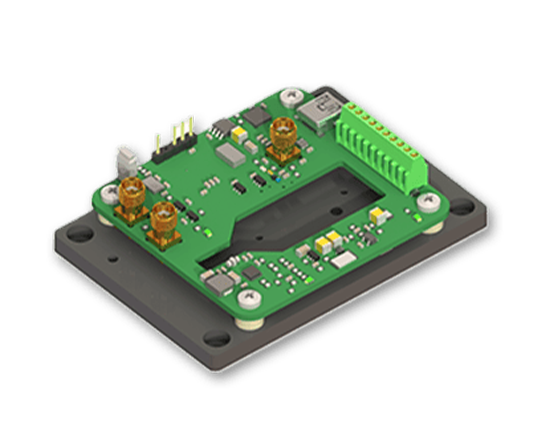





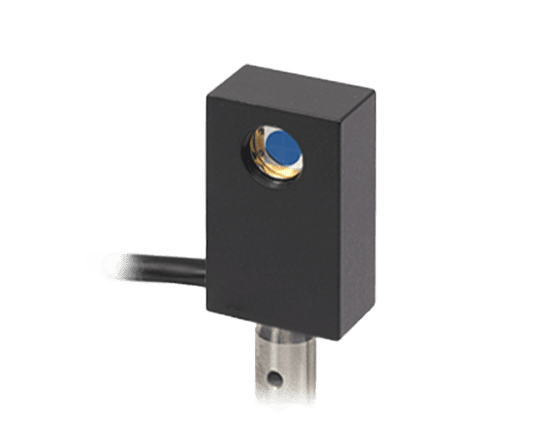







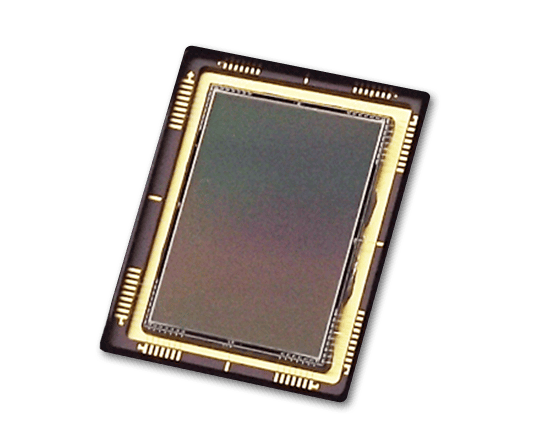
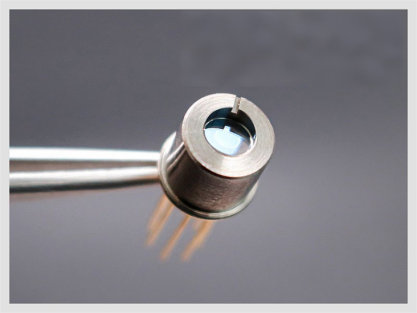
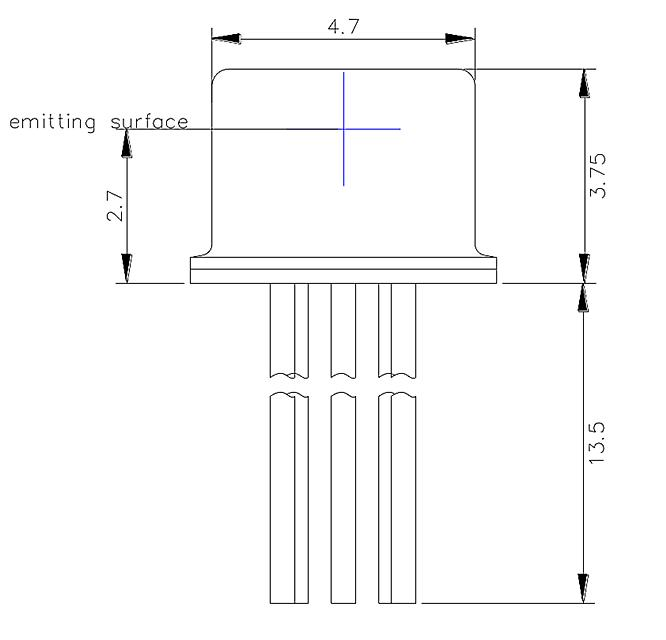
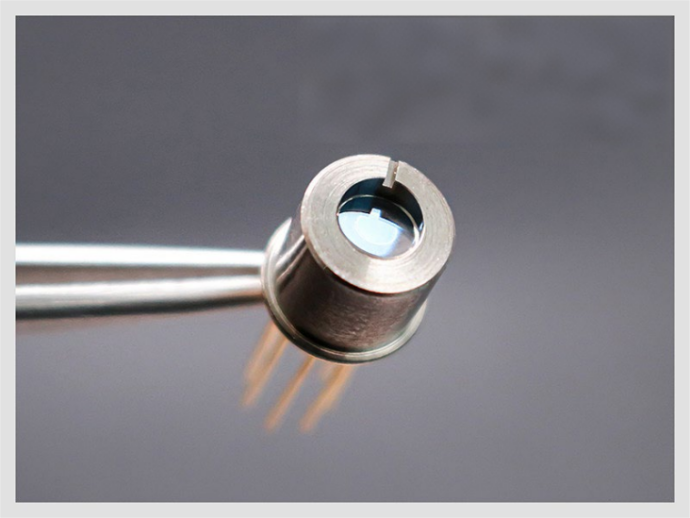
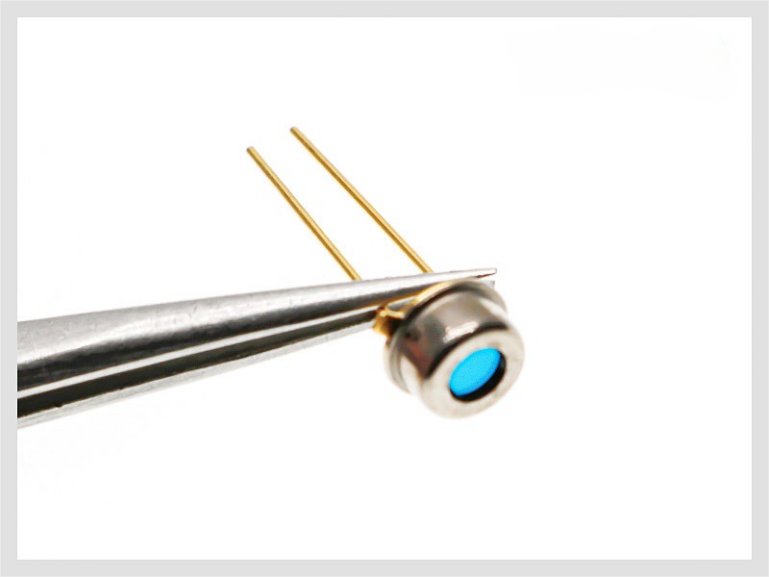
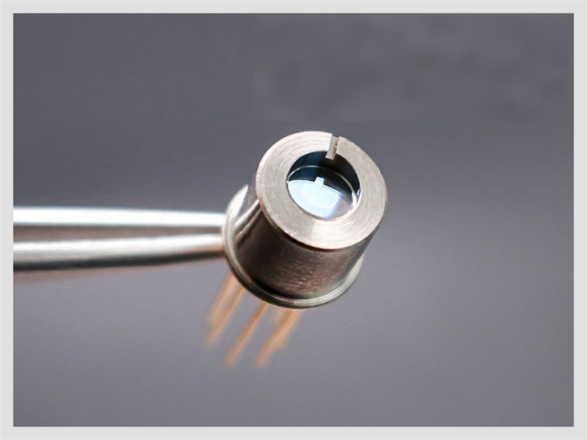
794.7nm 0.5mW SM VCSEL laser diode with TEC
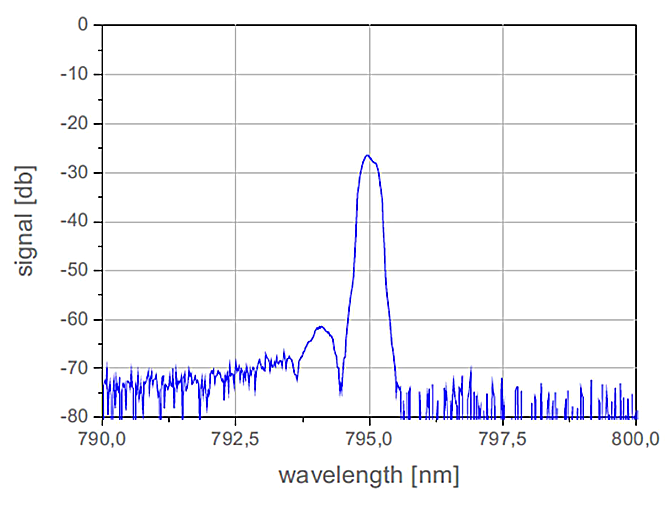
The 794.7 nm vertical-cavity surface-emitting laser is a vertically light-emitting GaAsP/AlGaAs single-mode semiconductor laser grown via Metal-Organic Vapor Phase Epitaxy (MOVPE) process, with TO5 package.It achieves wavelength tuning by adjusting laser drive current and operating temperature. Integrated with built-in Thermoelectric Cooler (TEC) and monitoring Photodetector (PD), this laser is specially designed for Tunable Diode Laser Absorption Spectroscopy (TDLAS) applications. Featuring ultra-narrow linewidth and wide tuning range enabled by TEC temperature control, it is a cost-effective option for rubidium atomic spectrum D1 transition research.
Product features:Vertical-cavity surface-emitting laser architecture;Built-in Thermoelectric Cooler (TEC) and thermistor;Integrated electrostatic discharge protection function;Ultra-narrow spectral linewidth 2 nm continuous wavelength tuning range supported by TEC temperature control Optimized for rubidium atomic D1 transition research scenarios
Part Number:MP-VCS-794.7-0.5-A81-TO5-SM-TEC
Application area:Tunable Diode Laser Absorption Spectroscopy (TDLAS) | Rubidium Atomic Spectroscopy | Optical Clock (Rubidium Atomic Clock)
Add to Cart Request for Quotation Consult Favorite
Center Wavelength
794.7nm
Detailed parameters
Laser specifications
Condition: Back-of-chip temperature (TO P) of 20°C and operating current (IO P) of 2.0mA unless otherwise noted
(TO P = Chip Back Temperature, controlled by Semiconductor Refrigerator (TEC)).
Parameters | symbol | Minimum | Typical values | Maximum | unit | Note: |
Emission wavelength | λR | 794.7 | ||||
Threshold current | ITH | 0.5 | mA | |||
Output power | Popt | 0.25 | mW | |||
Threshold voltage | UTH | 1.8 | V | |||
Drive current | IOP | 2 | mA | Popt = 0.3 mW | ||
Laser voltage | UOP | 2 | V | Popt = 0.3 mW | ||
Electro-optical conversion efficiency | ηWP | 12 | % | Popt = 0.3 mW | ||
Slope efficiency | ηS | 0.3 | W/A | |||
Differential series resistors | RS | 250 | Ω | Popt = 0.3 mW | ||
3dB bandwidth | V3dB | 0.10 | GHz | Popt = 0.3 mW Due to ESD protection diode | ||
Relative intensity noise | RIN | -130 | -120 | dB/Hz | Popt = 0.3 mW @ 1 GHz | |
Current tuning wavelength range | 0.6 | nm/mA | ||||
Temperature-tuned wavelength range | 0.06 | nm/K | ||||
Thermal resistance (VCSEL chip). | Rthermal | 3 | 5 | K/mW | ||
Edge mold suppression ratio | 25 | dB | I = 2 mA | |||
Beam divergence angle | θ | 10 | 25 | ° | Popt = 0.3 mW, full width 1/e2 | |
Spectral line width | 100 | MHz | Popt = 0.3 mW | |||
Thermoelectric chiller (TEC) characteristics | unit | Minimum | Typical values | Maximum | Note: |
thermoelectric chiller current | mA | -150(Heating) | +300 (Cooling) | Proper Heart Sink Required | |
NTC thermistor resistance value | KΩ | 9.5 | 10.0 | 10.5 | T=25°C @10 KΩ |
NTC Thermistor Resistance Value (Formula) | KΩ | 10/exp{3892-(1/289K-I/TOP)} | |||
Spectrum
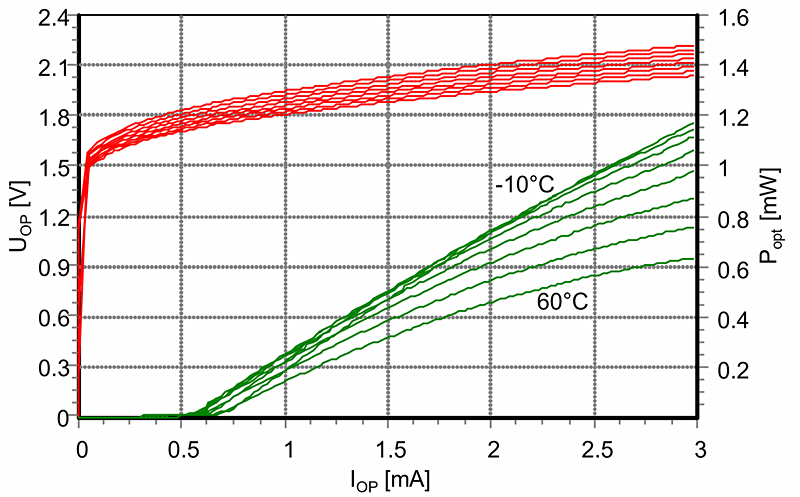
Optical power - current curve (at 25°C).
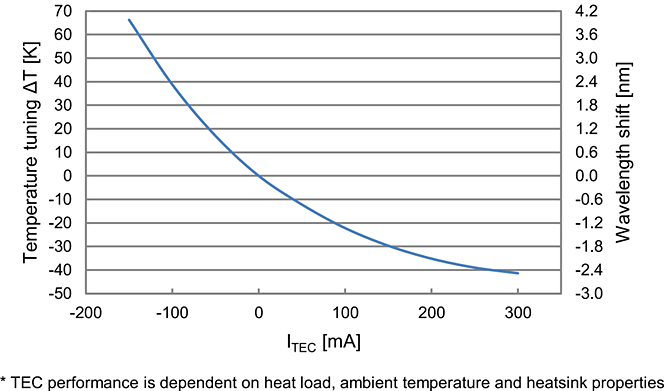
Temperature/wavelength tuning characteristics with semiconductor refrigerator (TEC) current
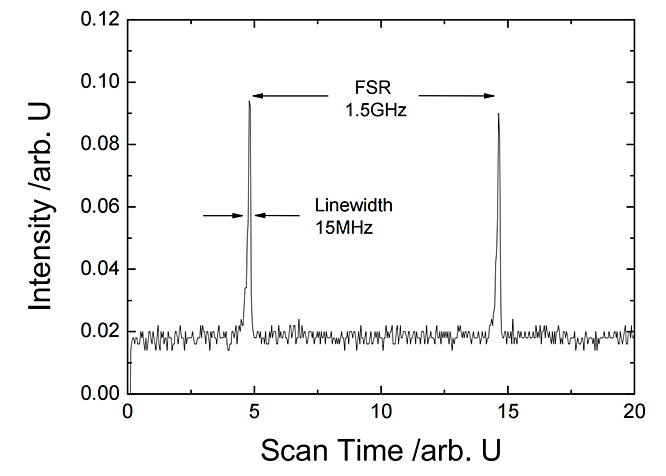
Fabry-Perot spectrum
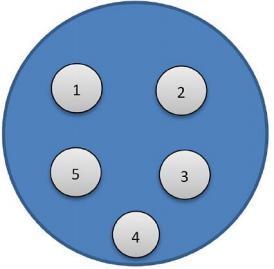
Pin definition
Absolute maximum rating
Item | unit | Minimum | Typical values | Maximum |
Storage temperature | ℃ | -40 | 25 | 125 |
Chip temperature | ℃ | +10 | 25 | 40 |
Operating current | mA | 0 | 2 | 2.5 |
Forward voltage | V | 0.8 | 1.2 | 1.8 |
Semiconductor Refrigerator (TEC) Current | mA | -150 | - | +300 |
Welding temperature * | ℃ | 100 | 130 | 270 |
Power consumption | mW | - | - | 5 |
(* The temperature of the semiconductor cooling device (TEC) must be below 150°C).
Ordering information
MP-VCS-□□□□-☆-A8▽-XX
□□□□: Wavelength
0760:760nm
0795:794.7nm
***
1653.7:1653.7nm
☆ :TEC
0:Without TEC 1:With TEC
▽:Wavelength Tolerance 1:±0.5nm
2:±1.5nm
XX: Package TO46
Safety and Operational Precautions
The device operates at a reverse bias voltage and must not be reversed. If the photodiode operates beyond its maximum rating, it may cause damage to the device or pose a safety hazard. The power supply used for this component must not exceed the maximum peak optical power.
Electrostatic protection – Electrostatic discharge (ESD) is the leading cause of unexpected laser diode failure. When operating photodiodes, strict anti-static measures must be taken: use anti-static wristbands, grounding work surfaces, and strictly follow anti-static operating specifications
--
Request for Quotation
We will reply to all your information about the product in time.
 10+
10 Years of Experience
10+
10 Years of Experience
 50
50 + Countries Bussiness
50
50 + Countries Bussiness
 10000
10k + Diodes sold worldwide
10000
10k + Diodes sold worldwide
 30
30+ Invention patent
30
30+ Invention patent
 10
10+ Advanced Optical Solutions
10
10+ Advanced Optical Solutions
⇪