- Cart
- |
- Personal Center
- |
New Products
633nm polarization-maintaining fiber isolator
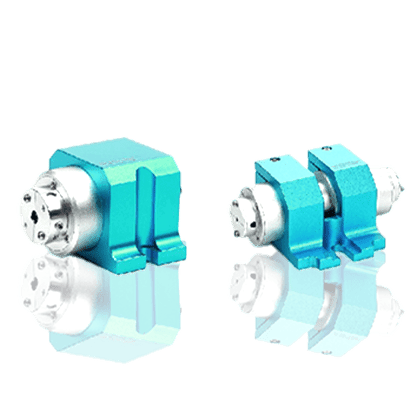
Idealphotonics' visible light isolator products can maintain excellent return light isolation performance under any polarization state. It has low loss, high isolation, high return loss, low polarization-dependent loss, low polarization mode dispersion, wide operating band and operating temperature range, and no glue in the optical path. These properties provide the possibility of low-cost solutions for communication networks. This series of products can be used in RGB system research, fiber optic equipment and lasers. Our pigtails have better optical performance with the help of our SM600 single-mode optical fiber and HB600 polarization-maintaining optical fiber. The excellent performance makes it more compatible with our 633nm single-mode polarization-maintaining fiber coupler.
DTS integrated optical module with acquisition card
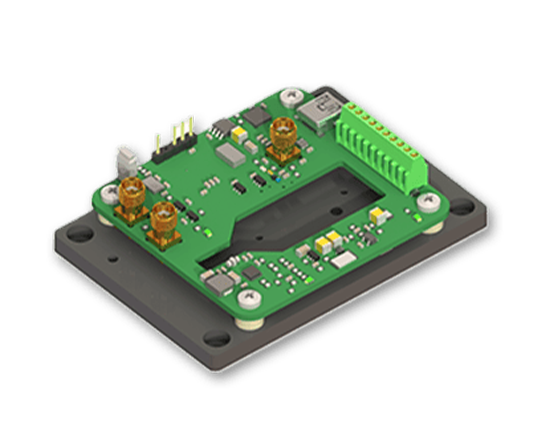
The DTS integrated optical module integrates the Raman light source, APD detector, and acquisition card independently developed by WDM and Idealphotonics with corresponding intellectual property rights. The module has high integration and small size. All modules have undergone rigorous environmental testing to ensure the long-term reliability and stability of the DTS integrated optical module, which can be directly integrated into the DTS overall equipment for use, making it convenient for customers to design and apply DTS equipment.
2000nm 60nm Single Mode Tunable Filter
High-speed tunable bandpass filter. As a two-port optical module, the input port receives broadband multi-wavelength light and only a small portion of the incident signal within the passband is allowed to pass through the filter and directed to the output port. The center wavelength of the selected band can be tuned to anywhere within the operating wavelength range. In our design flexibility, transmission bandwidth, wavelength tuning range can be customized. The voltage-controlled filter requires no moving parts, has fast tuning speed, and is compact and small in size. Our filters are used as suppression filters in optical systems to improve laser signal-to-noise ratio in wavelength scanning engines of optical spectrum analyzers (OSAs) and in system diagnostic communication systems.
950-1650nm InGaAs Single-Photon Array Detector component
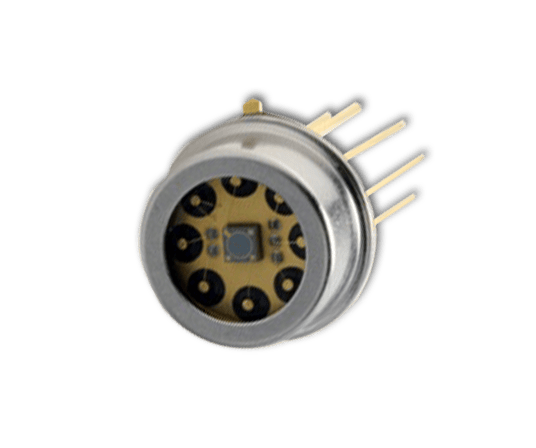
The MP-LTD-M-I-9V-4x4 detector module consists of 4x4 arrayed InGaAs Single-Photon Avalanche Diodes (SPADs), which are interconnected with CMOS main and passive quenching circuit chips. It also includes a voltage inverter module, a cooling module, and a signal control module. In Geiger mode, each pixel of the detector operates independently, detecting weak light signals in the near-infrared range of 0.95~1.65 μm, and outputs TTL signals in real time.
The side-polished fiber/D-type fiber (Side Polished Fiber) leverages our comprehensive fiber processing technology. Xiaoxiao Photonics currently offers customized processing services for D-shaped side-polished fibers. With 5 years of unique side-polishing expertise, we can precisely provide large-scale customized services to our clients. Customers only need to specify the fiber type, polishing length, and polishing depth they require.
8.91um high power benchtop DFB-QCL mid-infrared quantum cascade laser is an ultra-low power QCL DFB laser developed by Idealphotonics in the first half of 2018. The tunable range exceeds 100nm and the output power is greater than 20mw, which meets the industrial needs of customers testing gas sensors. Our laser collimated output has stable output power and high temperature and wavelength stability, which is several orders of magnitude higher than the stability of traditional high power quantum cascade lasers. It provides an excellent test light source for our mid-infrared test customers.
High Nonlinear Microstructured Optical Fiber
Using the most advanced fiber fabrication technologies, we can manufacture ultra-nonlinear photonic crystal fibers. Based on a high duty cycle structure design, the fiber exhibits ultra-high nonlinearity and allows for custom tailoring of its waveguide dispersion curve. This type of fiber is an ideal choice for supercontinuum generation and optical frequency comb generation.
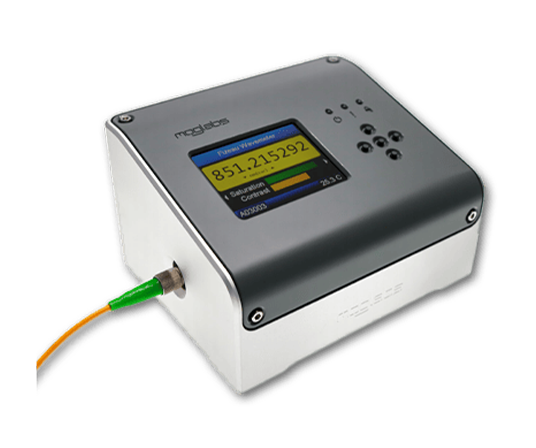
633nm 1m long distance fiber collimator single mode
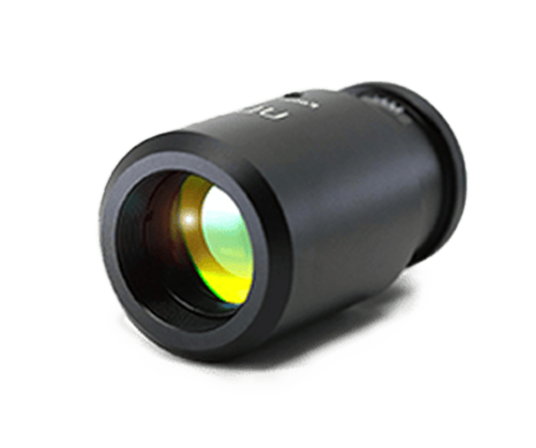
Idealphotonics' fiber collimators are pre-aligned and used to collimate the light emitted from FC/APC-connected fibers with diffraction-limited performance. These fiber collimators have no moving parts and are compact, making them easy to integrate into existing devices. Currently supported operating bands include 532/633/780/850/915/1064/1310/1550nm.
1550nm Polarization-Maintaining Fiber Polarization Combiner
The Polarization Beam Splitter (PBS/PBC) is used to couple two orthogonal polarized light beams into a single optical fiber, or to couple the orthogonal polarized light from a single output into two separate optical fibers. It can also be used in reverse to couple two orthogonal polarized light beams from a polarization-maintaining fiber into a single-mode output fiber. These devices are commonly used for power combining in pump lasers, improving the power of fiber lasers. An important application of these devices is in polarization multiplexing and demultiplexing technology, which enhances the capacity of optical systems.
5nm fused taper ultra-narrowband wavelength division multiplexer 1550/1555nm bandwidth ±0.5nm
Fused taper ultra-narrowband wavelength division multiplexer refers to a one-time taper wavelength division multiplexer with a wavelength interval of 5nm. Fused taper wavelength division multiplexing refers to a technology that transmits multiple wavelength optical signals in one optical fiber at the same time. With the development of optical communication systems, it is widely used in optical fiber sensors, optical fiber lasers, optical fiber amplifiers (EDFA), high-speed multi-wavelength transmission, etc. In the wavelength range, an optical communication system with multiple wavelengths on a pair of optical fibers or a single optical fiber is required, where the interval between each wavelength is 5nm. In this case, the wavelength division multiplexing with a smaller channel interval in the same window is called ultra-narrowband wavelength division multiplexing SUNBWDM, which has low loss, good stable performance, simple maintenance and convenient power supply.
1310nm Single-Mode Fiber Reflector
Examples of fiber total reflection mirrors used in erbium-doped fiber amplifiers. In this application, a fiber-based back reflector is placed at the end of an erbium-doped fiber, reflecting light back into the fiber in the direction of the incident light. A circulator is used to direct both the input and amplified output signals along their respective optical paths. This setup allows the signal light to pass through the gain fiber twice, effectively enhancing the amplifier's gain absorption efficiency. Another practical application of back reflectors is the construction of tunable back reflectors, as shown in Figure 2. Feedback signals from a downstream back reflector can cause instability in certain devices, such as laser diodes. By incorporating a tunable back reflector, the sensitivity of a device to back reflection can be determined. A tunable attenuator enables users to introduce a controlled reflection into the system. By analyzing the effects of back reflection, users can calculate parameters such as noise level, bit error rate, and distortion.
Interferometric Single-Mode Micro-Nano Fiber Sensor 1270-2000nm
The micro-nano fiber sensor has characteristics such as compact size, flexible structure, and strong transient field. It can measure the refractive index of surrounding liquids to detect slight biochemical changes. Reported types of micro-nano fiber refractive index sensors include grating-based and resonator-based sensors. Through structural design and optimization, we have developed several interferometric micro-nano fiber refractive index sensors with advantages such as high refractive index sensitivity, low temperature sensitivity, and low manufacturing cost. Research progress in interferometric micro-nano fiber sensors includes high-birefringence micro-nano fiber ring sensors, cascaded long-period grating sensors, and micro-nano fiber interferometric sensors based on single-taper structures. By designing and optimizing the interferometer's geometric structure, we have achieved refractive index sensing sensitivity at the level of 104 nm/RIU, providing an option for the development of low-cost, highly sensitive optical biochemical sensors.
⇪