- Cart
- |
- Personal Center
- |
info@idealphotonics.com


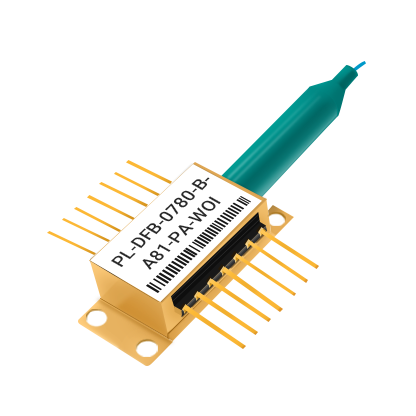
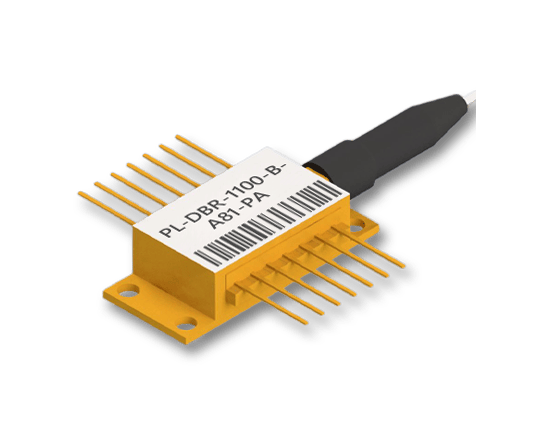
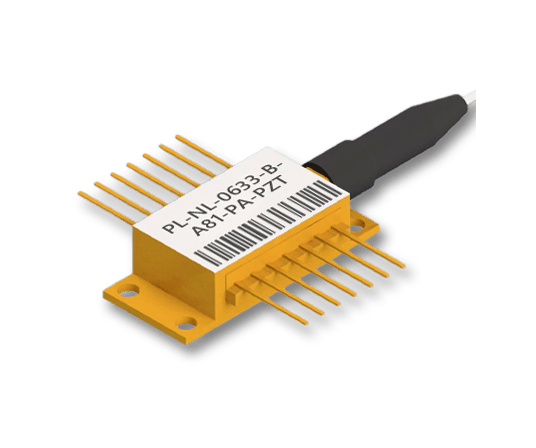
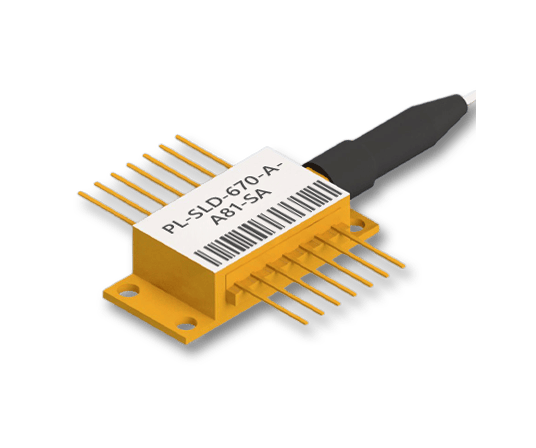















New Products
New Products

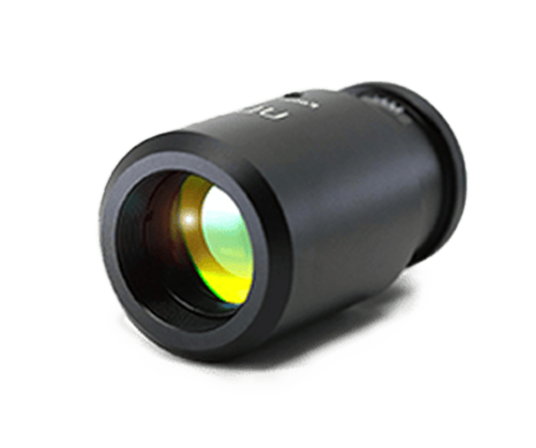
Single mode fiber achromatic collimator 1550nm (beam waist spot diameter 3.14mm FC/PC)
Composed of a large numerical aperture lens system, it can use multimode optical fibers with larger numerical apertures. The beam emitted from the multimode fiber can be shaped, or the spatial plane beam can be coupled into the multimode fiber to achieve good collimation and spot shape over long distances.

Single mode fiber achromatic collimator 1550nm (beam waist spot diameter 3.14mm FC/APC)
Composed of a large numerical aperture lens system, it can use multimode optical fibers with larger numerical apertures. The beam emitted from the multimode fiber can be shaped, or the spatial plane beam can be coupled into the multimode fiber to achieve good collimation and spot shape over long distances.
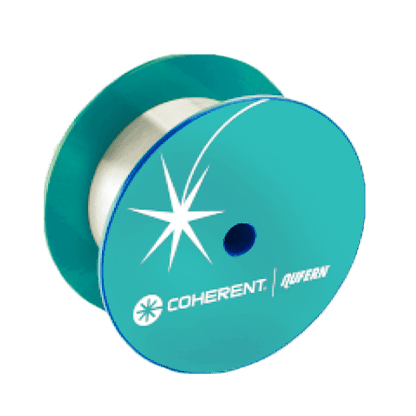
100um large core energy transmission optical fiber
We are currently able to provide international commercial-level quartz energy optical fibers in batches. Our energy optical fibers include two categories: quartz cladding type high-performance energy optical fibers and plastic cladding type high-performance energy optical fibers. Quartz cladding type energy optical fibers can transmit higher laser power, have good resistance to optical damage, as well as lower attenuation and higher light transmittance (from near ultraviolet band to near infrared band 400nm ~ 1600nm).

Single mode fiber achromatic collimator 1310nm (beam waist spot diameter 3.62mm FC/PC)
Composed of a large numerical aperture lens system, it can use multimode optical fibers with larger numerical apertures. The beam emitted from the multimode fiber can be shaped, or the spatial plane beam can be coupled into the multimode fiber to achieve good collimation and spot shape over long distances.
Ultra long distance collimating lens 525nm (5KM focal length 400mm SMA905)
The optical fiber output is collimated and reshaped into a large spot, suitable for high-power, long-distance transmission, and pulsed output lasers. Within the operating range, the light exhibits excellent collimation, with a uniform energy distribution and sharp, clear edges. The design adopts a multi-lens series with air gaps, compatible with single-mode, multi-mode, and large-core optical fibers, enabling functions such as remote sensing, illumination, and interference.

Single mode fiber achromatic collimator 1310nm (beam waist spot diameter 3.62mm FC/APC)
Composed of a large numerical aperture lens system, it can use multimode optical fibers with larger numerical apertures. The beam emitted from the multimode fiber can be shaped, or the spatial plane beam can be coupled into the multimode fiber to achieve good collimation and spot shape over long distances.

Single mode fiber achromatic collimator 1310nm (beam waist spot diameter 2.91mm FC/PC)
Composed of a large numerical aperture lens system, it can use multimode optical fibers with larger numerical apertures. The beam emitted from the multimode fiber can be shaped, or the spatial plane beam can be coupled into the multimode fiber to achieve good collimation and spot shape over long distances.
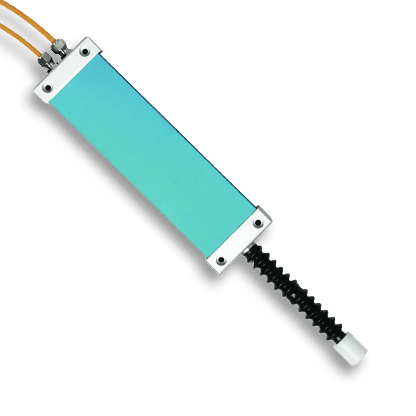
103.2m Nanosecond Fiber Optic Delay Line
Idealphotonics manufacturing compact and low-loss fiber optic coils requires attention, precision, and skill. Our F-TDC compact time delay coils feature a proprietary manufacturing process that provides extremely low insertion loss while meeting your budget and small space requirements.
10:90 633nm 1x2 PM Fiber Optic Coupler
The MP-FBC VISIBLE series single-mode fiber optic coupler is developed and produced based on our single-mode fiber fusion splice machine IPCS-5000-SMT. It is designed for light splitting in the visible wavelength range with excellent performance. We can offer couplers with central wavelengths of 405nm, 488nm, 532nm, 633nm, and 650nm, with a narrow bandwidth of ±20nm. Our couplers have a maximum power rating of 500mW when used with connectors or bare fiber. We offer various coupling ratios such as 50:50, 75:25, 90:10, or 99:1 for customer selection. Our 2x2 couplers, based on the fusion splicing process, are bidirectional, meaning any port can be used as the input
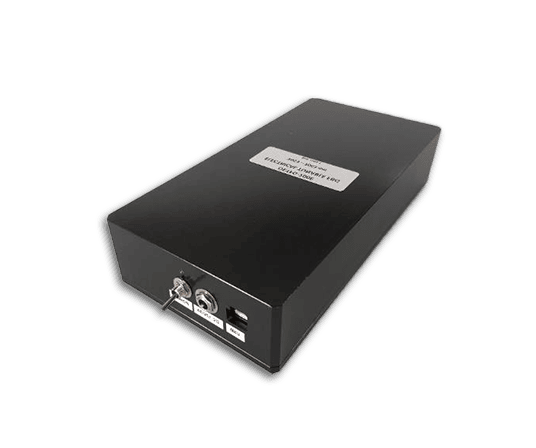
1.0um Desktop Polarization-Maintaining Fiber Amplifier 200mW
Idealphotonics adopts an all-polarization-maintaining fiber link design, specifically for narrow-linewidth (kHz) single-frequency signals, to perform multi-stage power amplification and achieve high power output. The output beam quality is close to the diffraction limit, maintaining a high polarization extinction ratio (PER). The high-power single-frequency polarization-maintaining fiber amplifier integrates unique stimulated Brillouin scattering (SBS) suppression technology and polarization control maintenance technology. The output power is available in a range from hundreds of mW to 100W, meeting the diverse needs of different application fields. Our standard product for single-frequency polarization-maintaining fiber amplifiers is in a desktop package, and we can also offer modular products according to user requirements.
1.0um Module Polarization-Maintaining Fiber Amplifier 200mW
Idealphotonics adopts an all-polarization-maintaining fiber link design, specifically for narrow-linewidth (kHz) single-frequency signals, to perform multi-stage power amplification and achieve high power output. The output beam quality is close to the diffraction limit, maintaining a high polarization extinction ratio (PER). The high-power single-frequency polarization-maintaining fiber amplifier integrates unique stimulated Brillouin scattering (SBS) suppression technology and polarization control maintenance technology. The output power is available in a range from hundreds of mW to 100W, meeting the diverse needs of different application fields. Our standard product for single-frequency polarization-maintaining fiber amplifiers is in a desktop package, and we can also offer modular products according to user requirements.
01:99 2x2 915nm single mode Fiber Coupler
MP-FBC-W8492 VISW series single-mode fiber couplers are developed and produced based on our single-mode fiber fused taper machine IPCS-5000-SMT. They are used for white light band splitting. They have excellent performance and can cover the entire white light band (840-9220nm). At the same time, we can provide customers with more cost-effective narrowband couplers with a central wavelength of 840nm (OCT application field), 880nm, and 915nm (LiDAR application field). The bandwidth is ±20nm. The maximum power of our couplers with connectors or bare fibers is 500mW. We have a variety of coupling ratios of 50:50, 75:25, 90:10 or 99:1 for customers. Our 2x2 couplers are based on the fused taper process, so they are bidirectional, and any port can be used as the input
 10+
10 Years of Experience
10+
10 Years of Experience
 50
50 + Countries Bussiness
50
50 + Countries Bussiness
 10000
10k + Diodes sold worldwide
10000
10k + Diodes sold worldwide
 30
30+ Invention patent
30
30+ Invention patent
 10
10+ Advanced Optical Solutions
10
10+ Advanced Optical Solutions
⇪