- Cart
- |
- Personal Center
- |
info@idealphotonics.com

















New Products
New Products
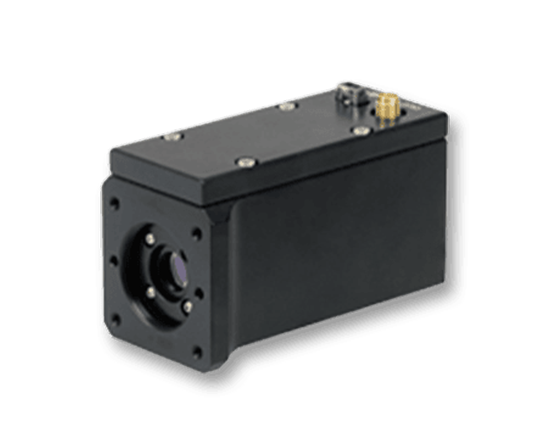
The MP-QCL-4600-FP-400-T high-power benchtop FP-QCL mid-infrared quantum cascade laser is a mid-infrared test laser developed by Idealphotonics in the first half of 2019. The low loss of the atmospheric window is conducive to the test research of space optical communications. Our benchtop light source has high power and does not require ITAR review, making it an excellent choice for commercial mid-infrared test light sources. The tunable range exceeds 100nm, and the output power is greater than 10mw to meet the industrial needs of customer testing. Our laser has a built-in Znse collimated output, stable output power, and high temperature and wavelength stability, which is several orders of magnitude higher than the stability of traditional high-power quantum cascade lasers.

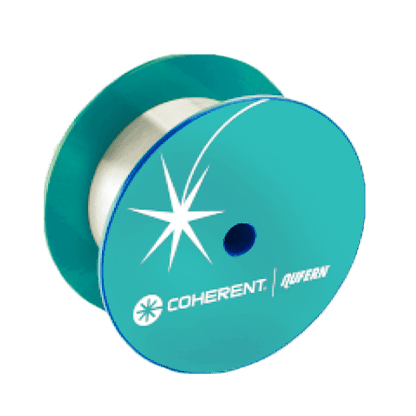
This Er150-5/125 fiber is a high doped Erbium fiber designed for fiber lasers and amplifiers that require highest core absorption for shortest application lengths. The core refractive index profile is tailored in order to realize a fiber with normal dispersion.
Polarization-Maintaining Thulium doped fibers
This thulium (Tm) doped fiber products have been developed for core pumped fiber lasers and amplifiers. High power lasers @ 2 microns need a reliable and efficient Tm-doped fiber.

This L-band Erbium Doped Fiber (EDF) product offers a pioneering fiber design that provides superior performance for L-band Erbium Doped Fiber Amplifiers (EDFAs). The core composition of EDFL-1480-HP-30 has been engineered to maximise the gain performance between 1570nm to 1630 nm and beyond. This allows use of the fiber in L, L+, L++ and Super L-band amplifiers.Its high cut-off wavelength (HC) fibers have larger core diameters, reducing non-linear effects and increasing efficiency at higher pump powers.
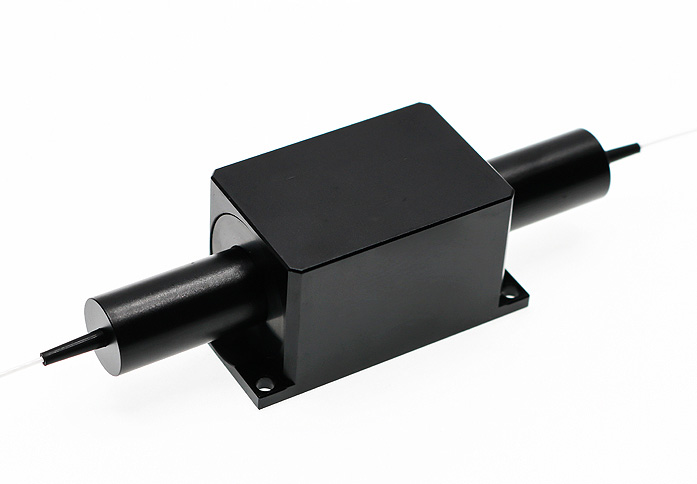
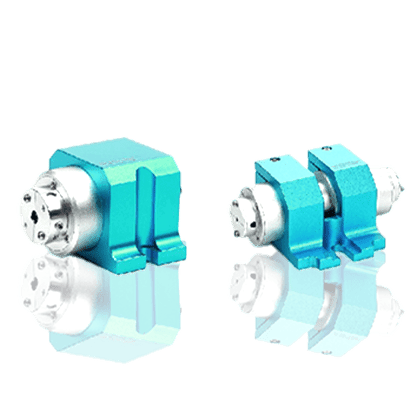
850nm high power polarization-mode fiber isolator
850nm high power polarization-mode fiber isolator has the characteristics of low insertion loss, high isolation, high power handling, high return loss, excellent environmental stability and reliability. It is an ideal choice for fiber lasers and instrument applications.
4.3um high power benchtop DFB-QCL mid-infrared quantum cascade laser is a mid-infrared test laser developed by Idealphotonics in the first half of 2019. The low loss of the atmospheric window is conducive to the test research of space optical communications. Our benchtop light source has high power and does not require ITAR review, which is an excellent choice for commercial mid-infrared test light sources. The tunable range exceeds 100nm and the output power is greater than 100mw to meet the industrial needs of customer testing. Our laser has built-in Znse collimated output, stable output power, and high temperature and wavelength stability, which is several orders of magnitude higher than the stability of traditional high-power quantum cascade lasers.

1550nm polarization-maintaining fiber collimator (20mm working distance)
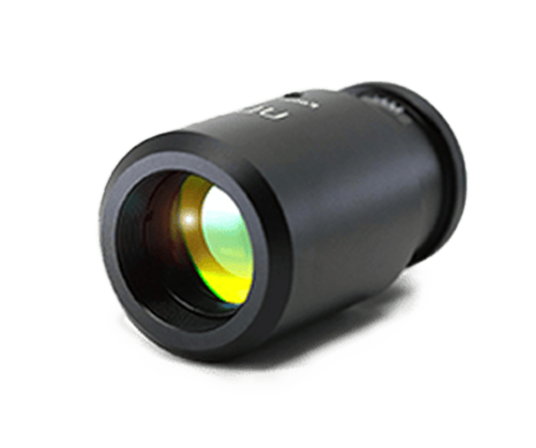
Idealphotonics' fiber collimators are pre-aligned and used to collimate the light emitted from FC/APC-connected fibers with diffraction-limited performance. These fiber collimators have no moving parts and are compact, making them easy to integrate into existing devices.

Polarization-Maintaining Erbium-Doped Fiber
This Erbium-doped single-clad PM fiber features a high absorption and high birefringence that make this product the ideal solution for the design of eye-safe PM fiber lasers and amplifiers for a wide range of 1.5 μm applications.
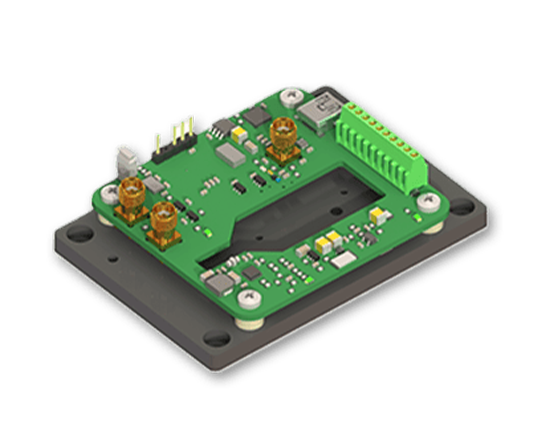
The 4.0um high-power benchtop FP-QCL quantum cascade laser is a continuous light laser developed by Idealphotonics. It has a relatively high output optical power and a collimated output power of several hundred milliwatts, which can meet the light source conditions for mid-infrared testing. In addition, the benchtop FP-QCL laser module integrates a driver and temperature control module, and can also use software to control the temperature and operating current of the tuned laser, which can make the laser work stably and maintain the accuracy of the measured values.

1560nm Transmission FBG Fiber Bragg Grating (AOS)
FBG stands for Fiber Bragg Grating, which refers to a fiber optic Bragg grating. It is a grating with a spatially periodic phase distribution formed within the fiber core. Its fundamental function is to act as a narrowband (transmission or reflection) filter or mirror within the core. Leveraging this property, a variety of unique fiber optic devices can be manufactured.
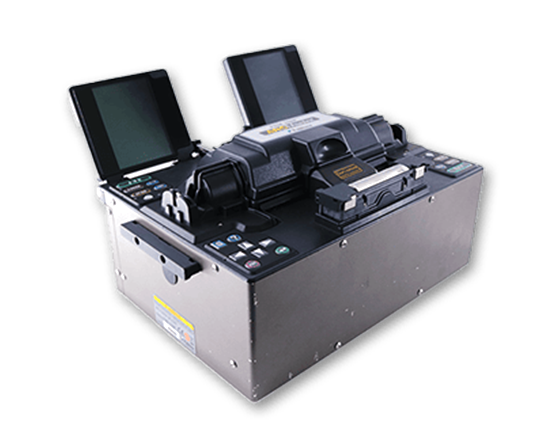
50:50 488nm 2x2 Polarization-Maintaining Fiber Coupler
The MP-FBC-W0488 RGB series polarization-maintaining fiber coupler is a high-performance coupler designed for visible light wavelength splitting, manufactured using our IPCS-5000-P polarization-maintaining fiber fusion tapering machine. It offers excellent performance and can cover the entire wavelength range (460-2200nm). The polarization-maintaining coupler is made with panda-type Fujikura polarization-maintaining fiber, enabling it to maintain a high polarization extinction ratio (PER) when light is emitted along the slow axis of the fiber. idealphotonics ' optical polarization-maintaining components are aligned to the slow axis by default, and our polarization-maintaining couplers feature a high extinction ratio and can operate over a wide temperature range from -40°C to 85°C
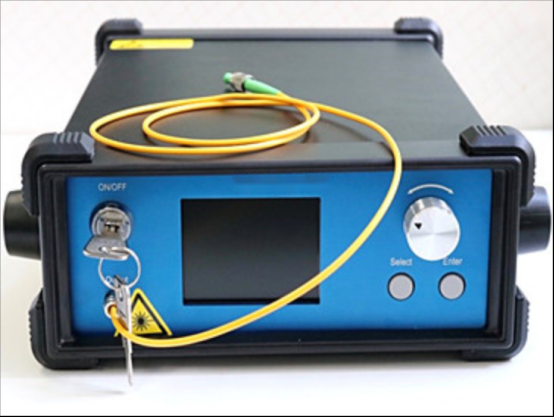
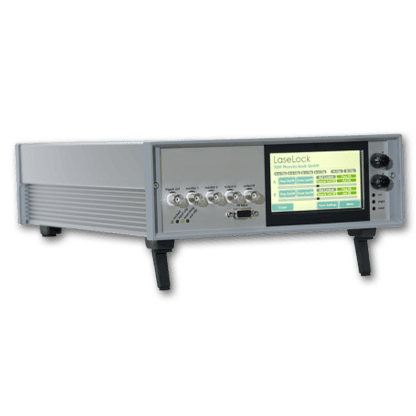
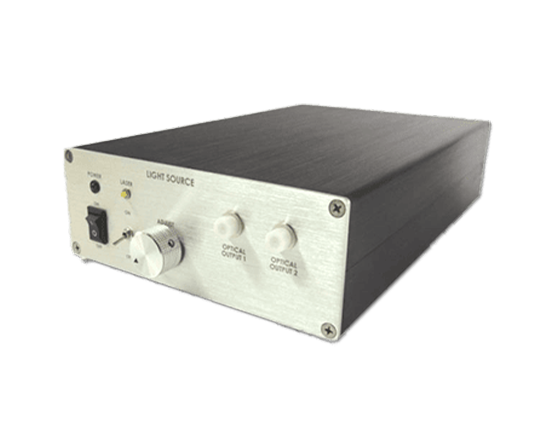
1310nm 15mW Benchtop Single-Mode SLD Light Source
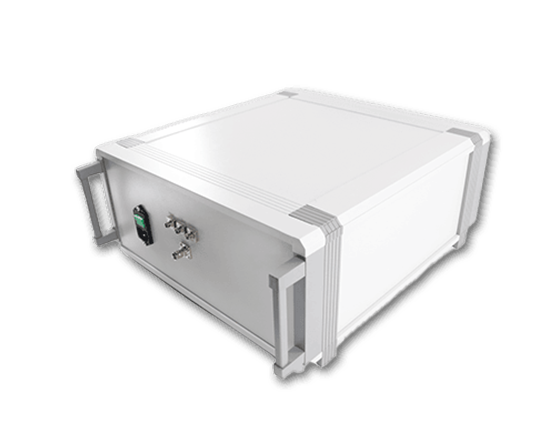
IdealPhotonics' Ultra-Width series 1310nm high-stability single-mode pump source utilizes a TEC-stabilized single-mode semiconductor laser, offering wavelength stability and high output power. Based on an advanced microprocessor control system combined with high-precision ATC and ACC (APC) control circuits, it ensures highly stable laser output while providing quick and intuitive operation. We can also offer corresponding communication interfaces and control software based on user requirements to enable computer control. This light source features a Turn-Key pump laser protection function to effectively prevent user errors. It supports coarse power adjustment (1mW steps) and fine power adjustment (0.1mW steps). 1310nm single-mode pump source is a highly integrated desktop system light source with a high-definition LCD display, continuously adjustable output power, and synchronous current and voltage display, making it ideal for experimental scientific research and production testing. Additionally, the company can provide modular packaging based on user needs for easy system integration.
 10+
10 Years of Experience
10+
10 Years of Experience
 50
50 + Countries Bussiness
50
50 + Countries Bussiness
 10000
10k + Diodes sold worldwide
10000
10k + Diodes sold worldwide
 30
30+ Invention patent
30
30+ Invention patent
 10
10+ Advanced Optical Solutions
10
10+ Advanced Optical Solutions
⇪